


.svg)



Social identity verification ties a respondent's real social accounts to their survey response, which raises the level of online trust. It uses secure, privacy-first checks to confirm who is answering. Digital identities come with real concerns about privacy and data protection. BlockSurvey's feature handles social identity verification directly, authenticating respondents through their existing accounts.
Why social identity verification is useful
Businesses make decisions from data, and much of that data comes from online activity. Social identities are a daily extension of how people present themselves, and they reflect different sides of a person. BlockSurvey lets businesses collect social profiles so they can engage respondents more personally and understand them better.
The Social Identity Verification component
BlockSurvey's Social Identity Verification component lets survey creators add questions that require a survey taker to submit and verify their profile information.
It is simple to set up. The survey creator selects the social identity components they want from the list, and BlockSurvey handles the rest.
.png)
It is easy for the survey taker too. They click the "Verify" button and follow the authentication steps.
.png)
A short look at each Social Identity Verification component
-
Google Social Identity Verification component and Use cases:
Google Social Identity Verification lets respondents verify their identity using their Google account.
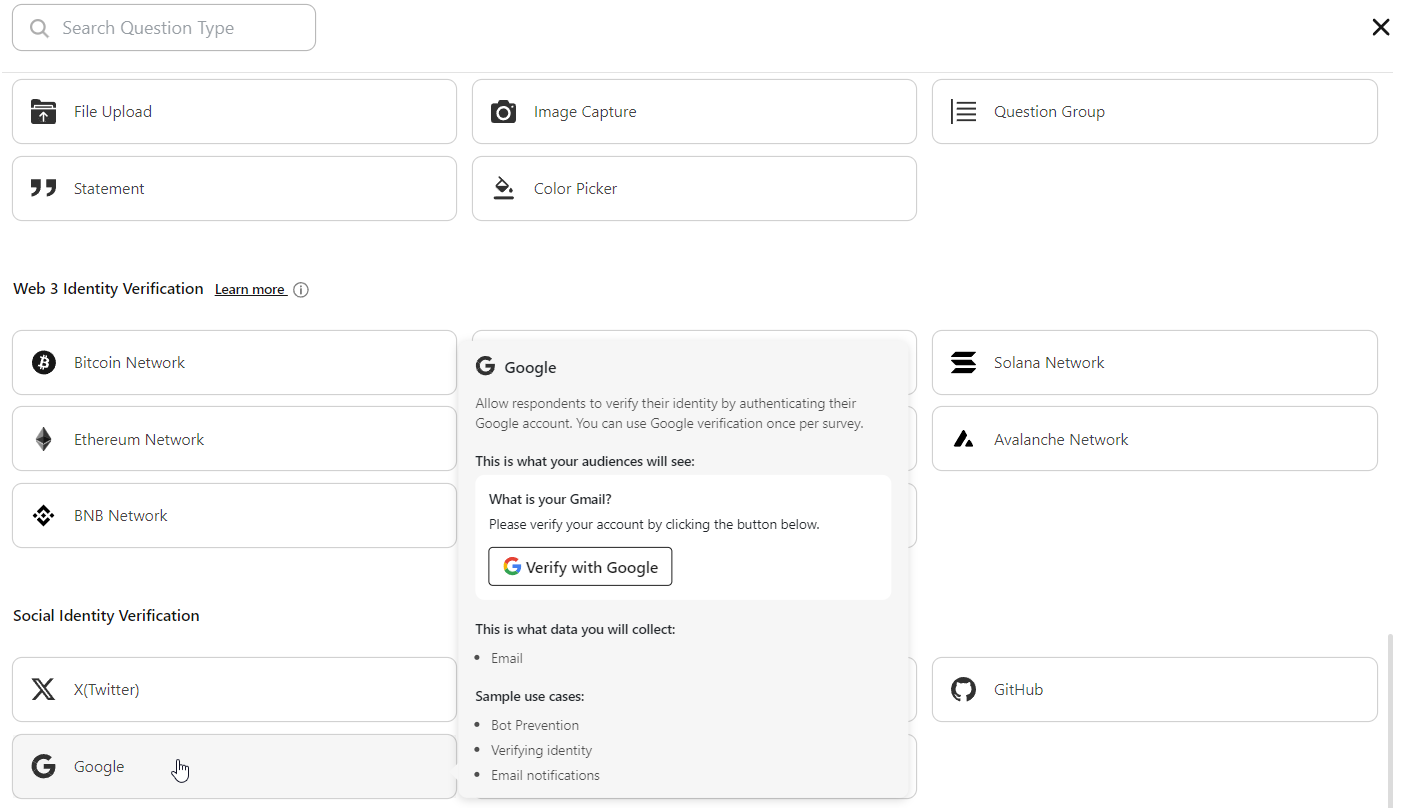
Use cases:
Bot Prevention: Requiring users to verify their identity through a social media account adds another layer of bot prevention. Because it relies on existing social profiles, it is harder for bots to get through and it raises the level of user authentication.
Email Notifications: Verifying a social profile helps confirm that users receive legitimate emails, which lowers bounce rates and makes communication more reliable.
-
Github Social Identity Verification component and Use cases:
GitHub's Social Identity Verification component adds security by using a user's social profile to confirm that contributors in the development ecosystem are who they claim to be.
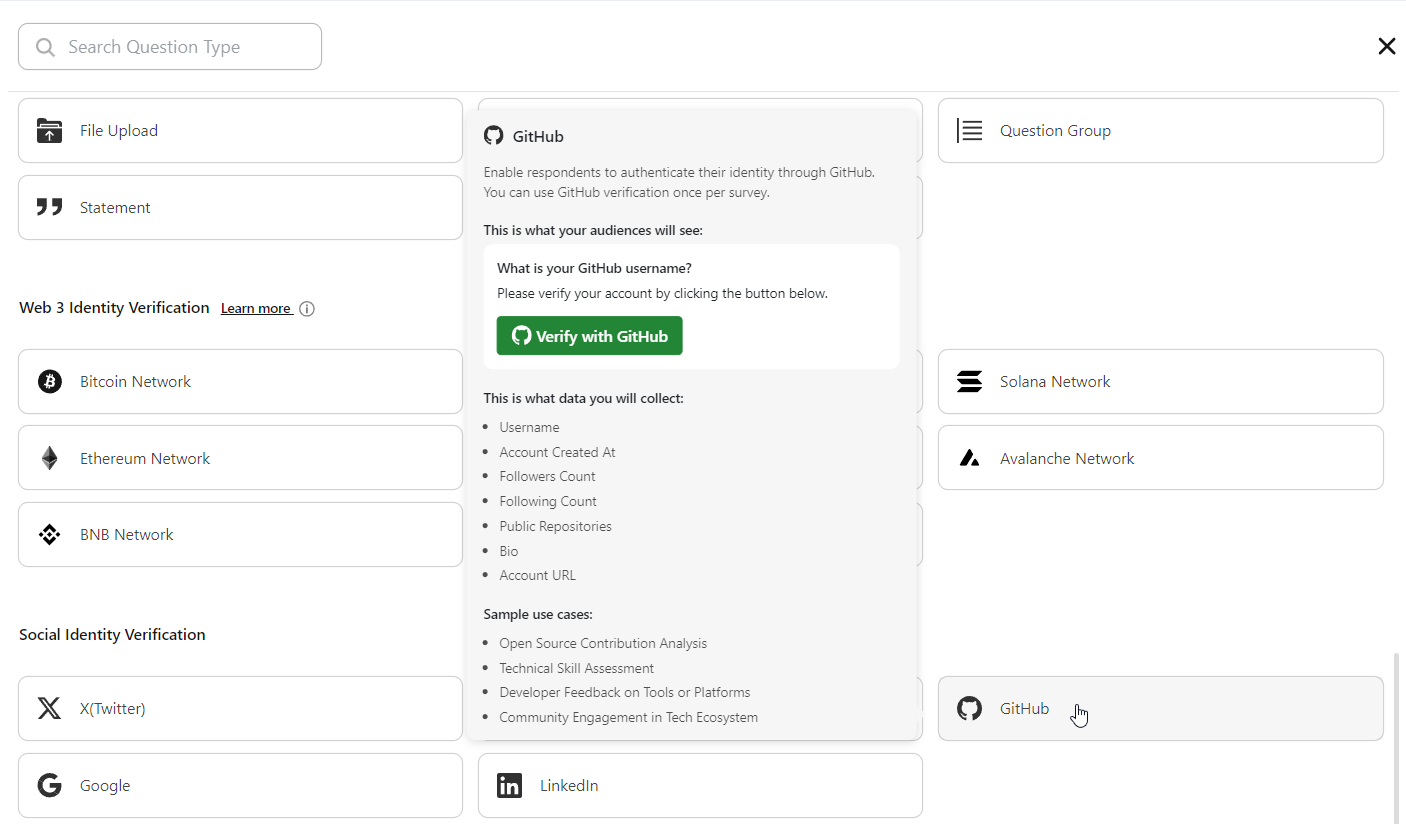
Use cases:
Open Source Contribution Analysis: Social Identity Verification links a contributor's code contributions to a verified social profile, which makes them more credible. That helps build a more transparent open-source community and reduces the chance of fraudulent or misleading contributions.
Community Engagement: GitHub is a central hub for the global technology community. If you want to build engagement there, it helps to check credentials carefully before you take part.
-
Twitter Social Identity Verification component and Use cases:
The Twitter Social Identity Verification component adds another layer of user verification.
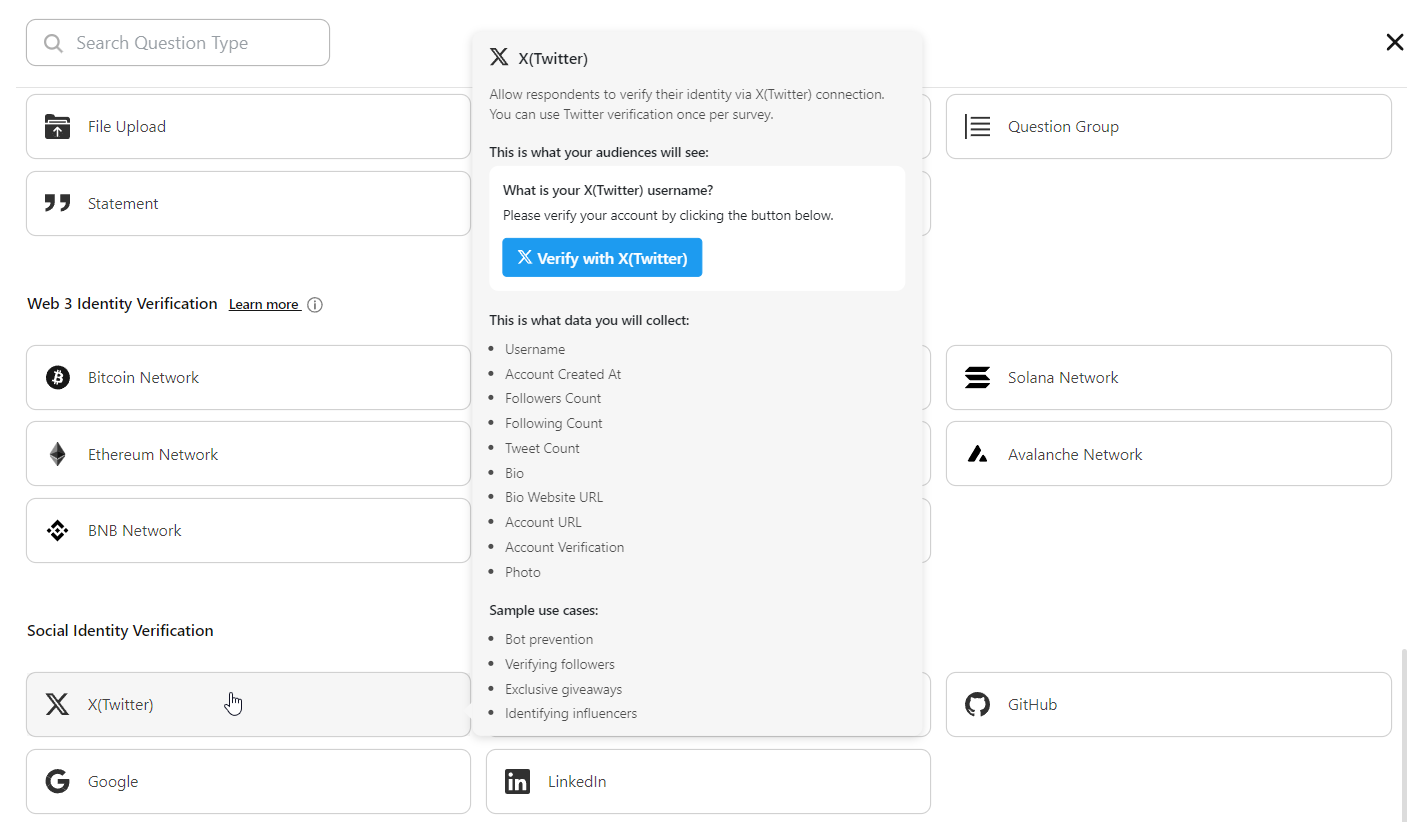
Use cases:
Verifying Followers: Using Social Identity Verification to check followers on Twitter gives a more accurate read on whether those followers are real. It makes follower counts more credible, lowers the risk of fraud, and keeps the environment more secure.
Exclusive Giveaways: For giveaways, Twitter Identity Verification asks participants to authenticate their entries through their social profiles. This adds a layer of verification and makes the process more transparent, so giveaways reach and reward genuine people in the community.
-
Discord Social Identity Verification component and Use cases:
The component makes users more accountable, reduces the risk of impersonation, and helps keep interactions safer and more reliable within Discord communities.
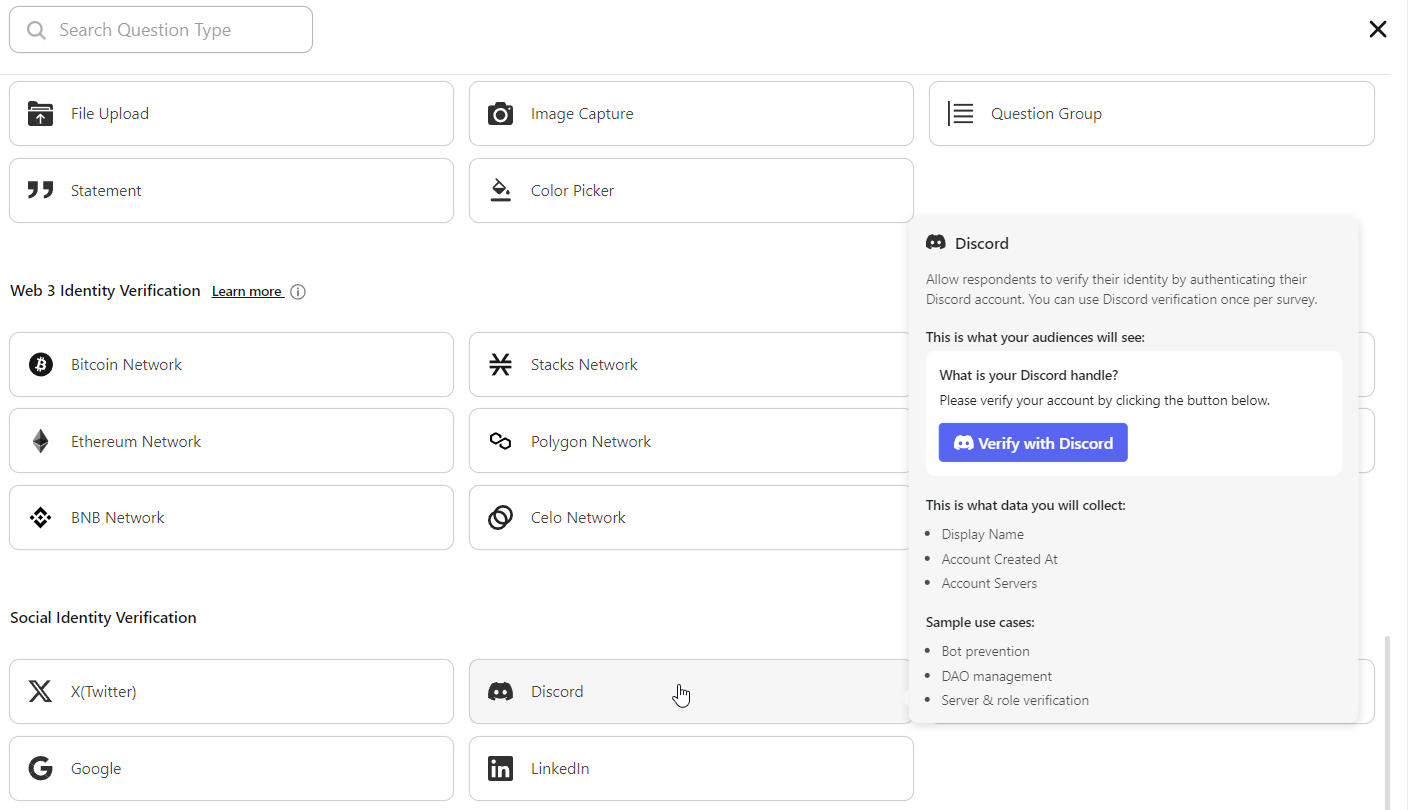
Use cases:
Bot Prevention: Requiring users to verify their identity through a social media account adds another layer of bot prevention. Because it relies on existing social profiles, it is harder for bots to get through and it raises the level of user authentication.
Server and Role Verification: Using Social Identity Verification for server and role verification means linking user accounts, which keeps specific server roles more secure and authenticated. It makes user roles more reliable, reduces impersonation risk, and supports a trusted community space on Discord.
-
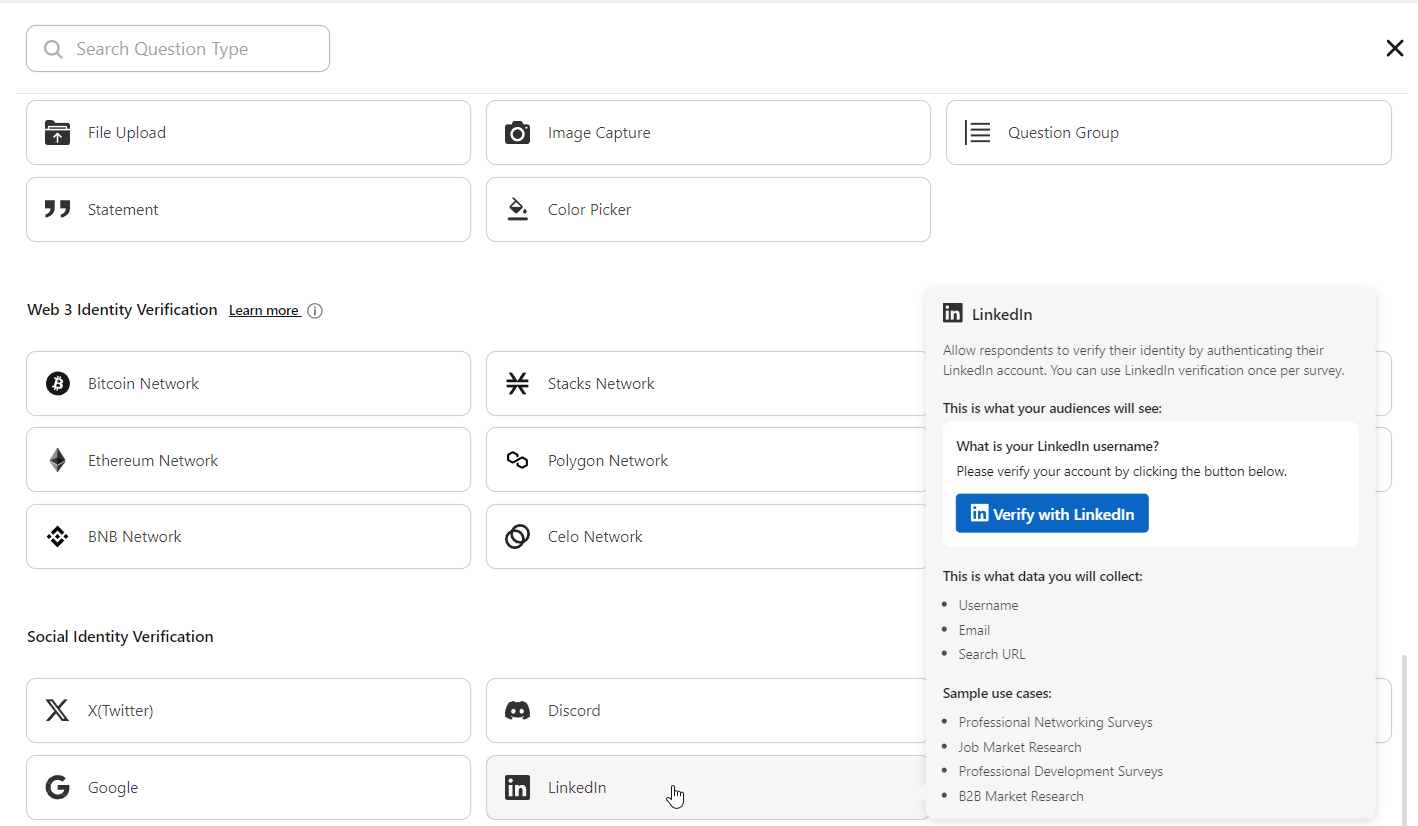
LinkedIn Social Identity Verification component and Use cases:
The LinkedIn Social Identity Verification component supports a more professional and trustworthy environment, which matters most where professional networking and identity verification are important.
Use cases:
Job Market Research: Using the LinkedIn Social Identity Verification component in job market research gives a more accurate and reliable analysis, because the insights come from verified professional profiles. This makes research findings more credible, streamlines talent acquisition, and builds a more trustworthy ecosystem for employers and job seekers.
B2B Market Research: This component supports a more accurate read on industry trends, builds trustworthy B2B relationships, and makes targeted research easier for informed decision-making within the business ecosystem.
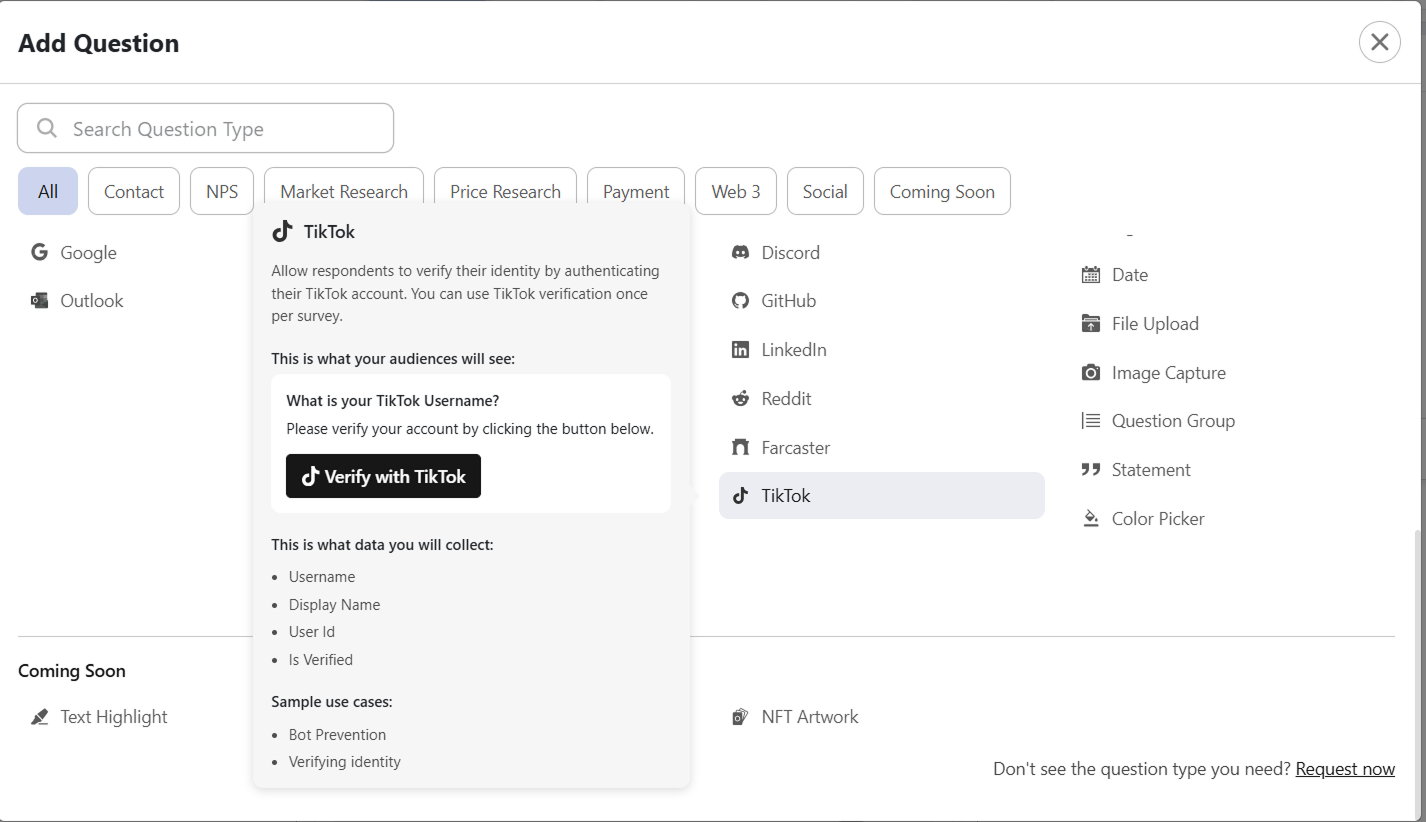
TikTok Social Identity Verification component and Use cases:
The TikTok Social Identity Verification component lets respondents verify their TikTok profile, helping survey creators authenticate participants and better understand their social audience.
Use cases:
Audience Verification: Verify TikTok profiles to distinguish genuine participants from unverified or potentially duplicate accounts.
Creator & Community Research: Collect insights from verified TikTok users to better understand audience interests, content preferences, and engagement.
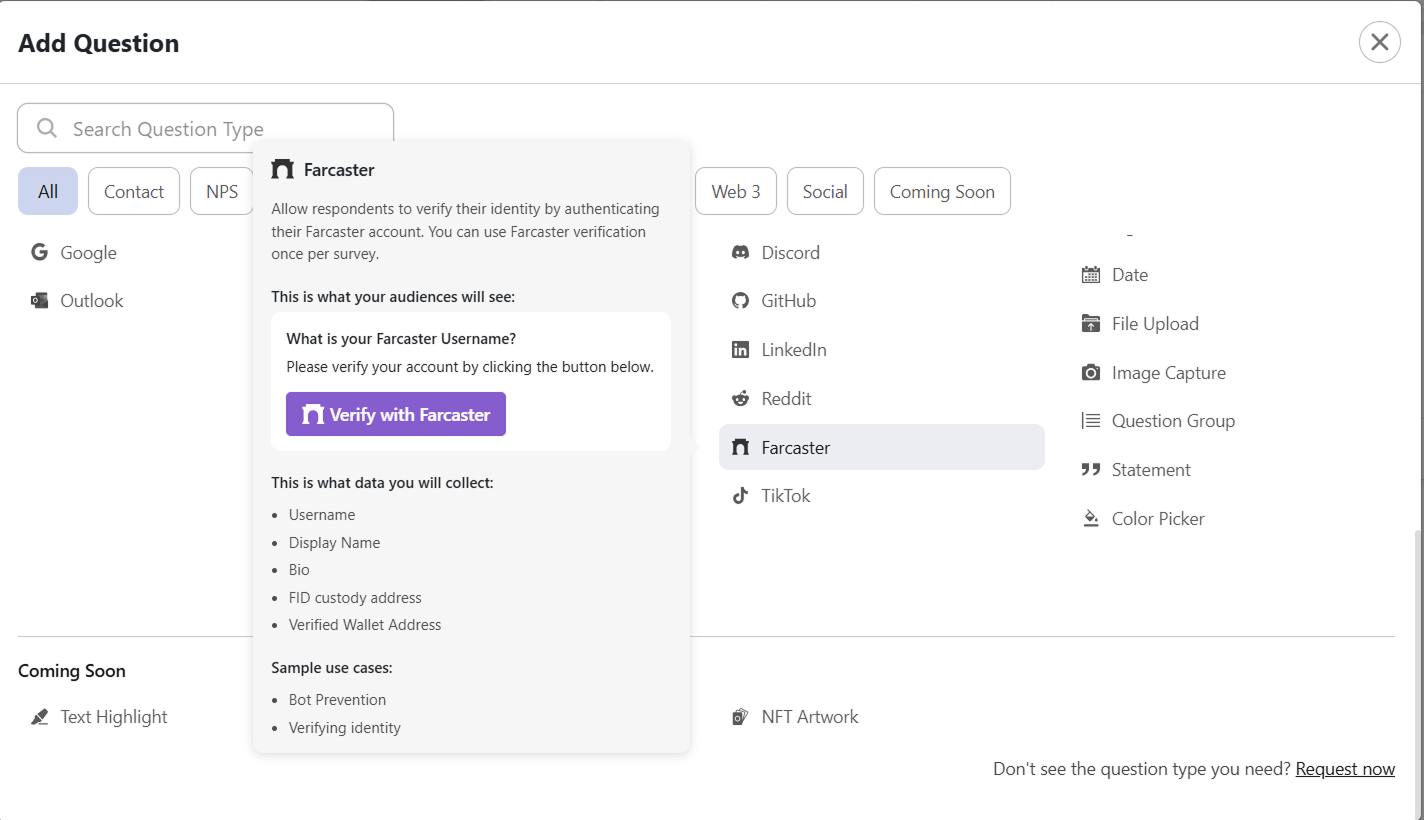
- Farcaster Social Identity Verification component and Use cases
The Farcaster Social Identity Verification component lets respondents verify their Farcaster profile, making it easier to authenticate users within decentralized social communities.
Use cases:
Web3 Community Verification: Verify Farcaster identities when conducting surveys or research with Web3 and decentralized social communities.
Community Engagement: Identify and engage verified Farcaster users to better understand community preferences, interests, and participation.
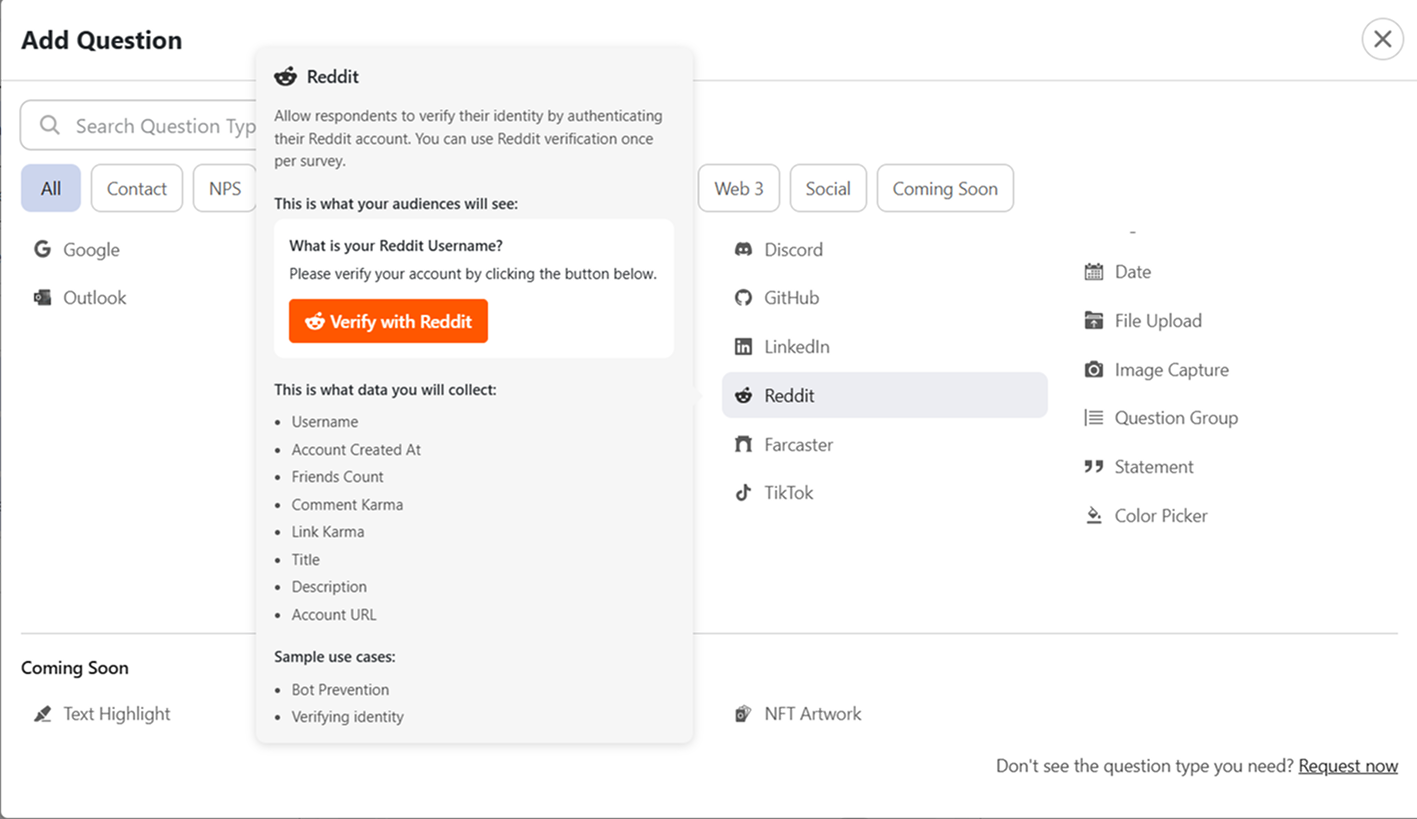
- Reddit Social Identity Verification component and Use cases
The Reddit Social Identity Verification component lets respondents verify their Reddit profile, helping survey creators authenticate participants from Reddit communities.
Use cases:
Community Research: Verify Reddit users when gathering feedback from specific communities and interest groups.
Audience & Product Research: Understand the preferences, experiences, and opinions of verified Reddit users to support more targeted research.
The bigger picture
Collecting social auth data gives businesses a lot of information they can use in several ways.
- Audience Segmentation: Social Identity Verification lets businesses group their audience by demographics, interests, behaviours, and preferences. That grouping supports targeted content, so messages fit specific age groups, genders, locations, and interest clusters.
- List Creation: Businesses can build targeted lists of people who engaged with specific content, showed interest in certain products or services, or fit a particular demographic. These lists give personalized marketing campaigns a solid starting point instead of generic messaging.
- Audience Building: Social Identity Verification helps businesses understand their current audience and spot potential new customers. Refining content from real-time data keeps the approach responsive, which strengthens the connection with the existing audience while opening paths to reach new customers.
- Web3 DApps and DAOs Audience: As the digital space moves toward Web3, with decentralized applications (DApps) and decentralized autonomous organizations (DAOs), social identity verification matters more. With it, businesses can recognize and engage these communities and learn about their discussions, preferences, and emerging trends in the Web3 space.
Also Read: Collect Verified Social Identity Data, Bot Prevention, and Email Verification.
Conclusion
Social Identity Verification shapes how users engage with digital platforms. User authentication can balance accessibility, security, and ethical concerns, and that balance is within reach. Social identity verification will keep developing as digital platforms change, and BlockSurvey's component gives survey creators a practical way to use it today.
Enhancing Survey Authenticity using Social Identity Verification FAQ
How does social identity verification enhance survey authenticity?
How does social identity verification contribute to the authority of survey results?
How can businesses build trust with respondents through social identity verification?
Get insights.
Unlock value.
- 14-day free trial
- Set up in minutes
- End-to-end encrypted