


.svg)



If you share a survey publicly, someone can copy or reuse it without asking. A watermark makes ownership visible and gives the survey a more finished look. BlockSurvey's Watermark feature adds one across your survey.
You can set it up in a few clicks. Use it to protect your content, add your branding, or make your surveys look more polished.
Why watermarks matter in surveys
When you share a survey publicly, someone can copy your questions or reuse your content. A watermark shows who owns the survey and keeps it looking professional.
A few reasons to use one:
- Protect your content: Discourage others from copying or reusing your survey without permission.
- Brand your survey: Add your organization name or logo text as a watermark so people recognize the survey. This differs from white-labeling, which customizes the full survey experience such as the URL and branding. Watermarking is a simple visual mark shown inside the survey.
- Look more professional: A well-branded survey builds trust with your respondents.
How to set up a watermark
Setup takes a minute:
- Go to the Design screen of your survey.
- Click on Settings -> Brand -> Watermark.
-
Toggle on "Add a watermark to brand your survey or protect its content."
.png)
- Enter the text you want to display as your watermark, for example your organization name or project title.
-
Choose the layout:
- Repeat: text repeats across the entire screen.
- Grid: text appears in a neat grid.
- Single: one watermark appears, and you can pick where to place it (center, top-left, bottom-right, and so on).
-
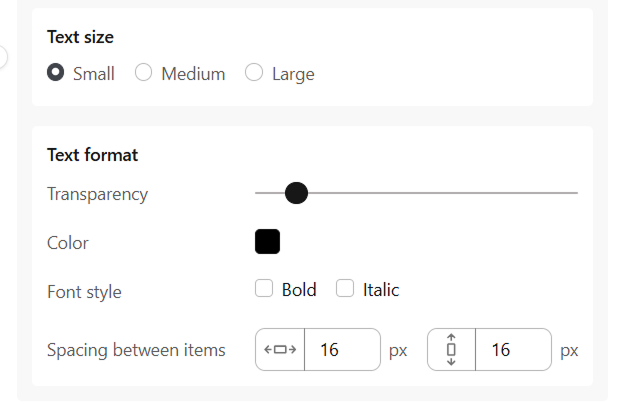
Customize the look:
- Text size: small, medium, or large.
- Style: bold or italic.
- Orientation: horizontal or diagonal.
- Transparency and color: set how light or bold the watermark appears and pick the color.
- Once your questionnaire is ready, publish and test it. Anyone taking the survey will see the watermark.
.png)
Use cases for watermarks in surveys
Here are some practical ways to use the Watermark feature, based on how people run surveys in different fields:
- Market research surveys: Add your company or client name as a watermark so that if someone shares the survey, it stays clear who owns it. This protects the work you put into writing the questions.
- Education and training: If you teach or train, add the course name, class name, or institution name as a watermark. Students can see the survey is official, and it discourages others from copying your content.
- Freelancers and agencies: Add your brand name as a watermark to show ownership. It makes the survey look professional and secure.
- Healthcare surveys: If you run surveys in clinics or hospitals, add the clinic name or department as a watermark. This helps respondents trust that the survey is legitimate.
- Employee feedback or internal surveys: Add "Confidential, HR Team Only" or your department name as a watermark to show that the survey is private and internal to your organization.
- Event registration or feedback forms: Add the event name or your organization name to keep the form branded and discourage others from copying it for their own events.
Also Read: Confidential Surveys and Data Ownership in Surveys.
Conclusion
A watermark is a small detail, but it helps protect your survey and keep it looking professional. With BlockSurvey's Watermark feature, you can share surveys knowing your content is marked and your brand stays visible.
Try the Watermark feature in BlockSurvey to protect and brand your surveys.
How to add Watermarks to surveys? FAQ
What is a survey watermark and why use one?
How do I insert a watermark in a survey?
How do I add a watermark to a survey for free?
Are watermarked surveys still anonymous?
Can you watermark a Google Form?
What watermark layout and style options are available?
Get insights.
Unlock value.
- 14-day free trial
- Set up in minutes
- End-to-end encrypted