


.svg)



Collecting resumes, receipts, images, or other documents through a survey often raises two problems: keeping the data secure and keeping it organized. BlockSurvey's File Upload question type handles both.
Uploads are secure and encrypted by default, and you can customize file names and access. Whether you are collecting job applications, school assignments, or event forms, you get the files you need without extra cleanup.
Why secure file collection matters in surveys
Insecure or unorganized file handling can lead to data leaks, privacy problems, and time lost sorting and retrieving files. A secure, flexible upload system protects respondent data and keeps your workflow moving.
What you get from File Upload in surveys
The value is not only in collecting files, but in collecting them efficiently, securely, and with the right context attached. Here is what the feature does:
- Attach supporting documents easily: Collect resumes, receipts, images, or ID proofs directly in the survey.
- Simplify data collection in the field: Respondents can upload photos and scanned documents on the spot.
- Save time on data handling: Customizable file names cut the manual work of organizing and retrieving files.
- Add context to responses: Attachments let respondents share real-world documents alongside their answers, so your data is more complete.
How to set up File Upload
Follow these steps to set up File Upload in BlockSurvey:
- Go to the Design screen of your survey.
-
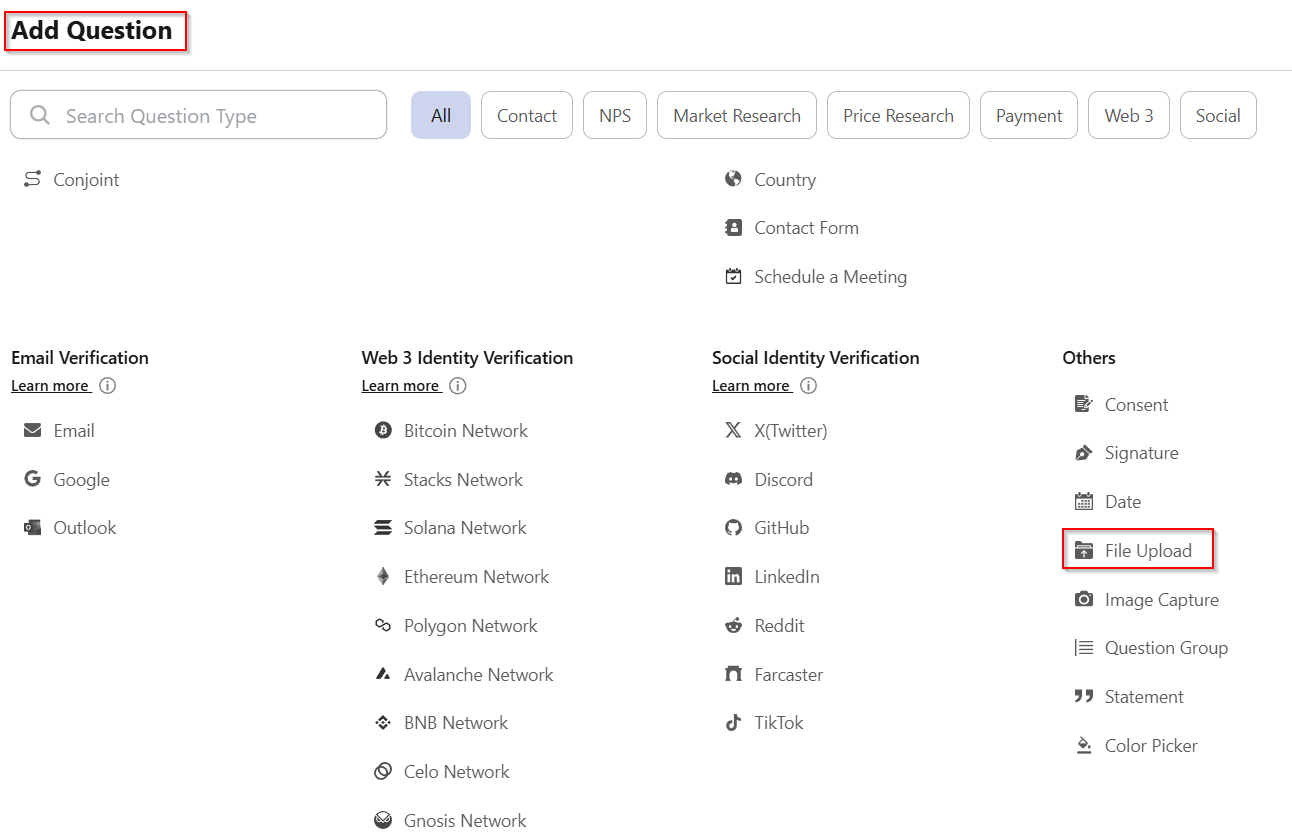
Click on Add Question and select File Upload.
-
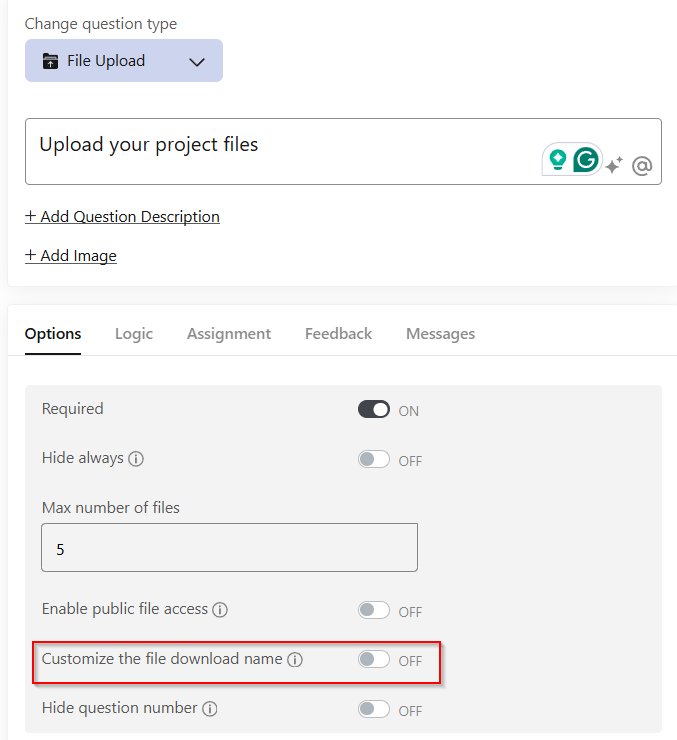
Under the Options tab, specify:
- Max number of files to collect per respondent. (Note: The max file size limit is 10 MB.)
- By default, all uploaded files are encrypted. To enable public access, turn on the "Enable public file access" option. (Note: Public files are not encrypted.)
-
To customize file names, turn on "Customize the file download name".
-
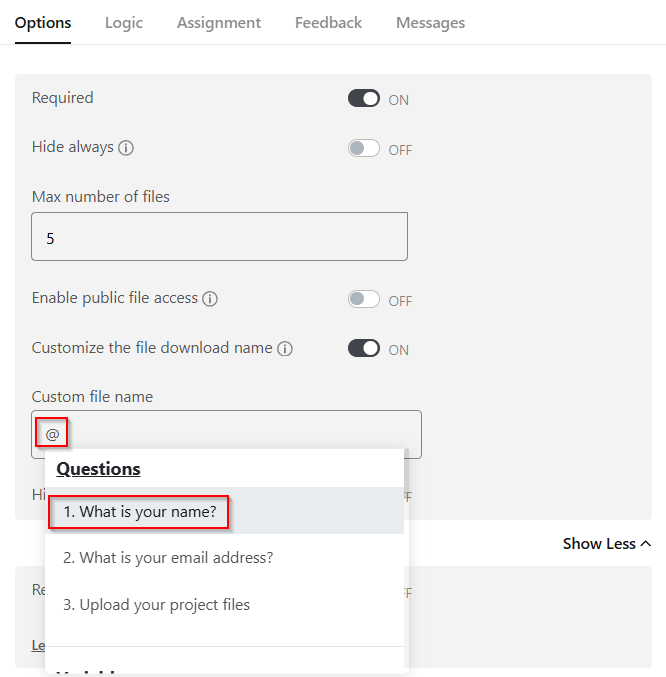
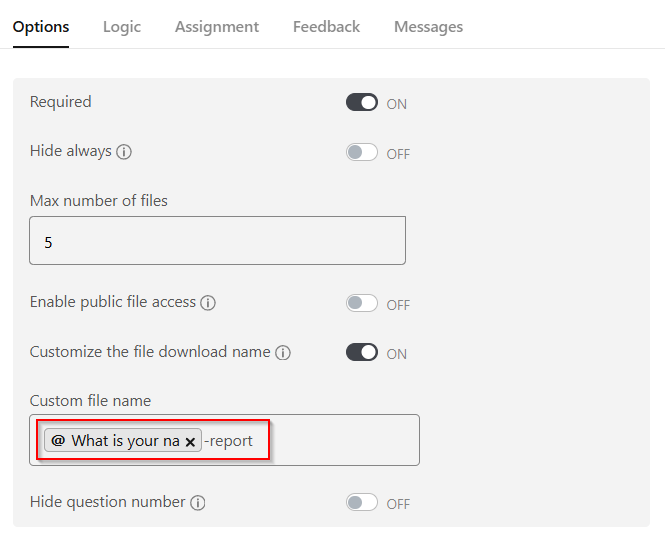
In the Custom File Name field, type @ and select a previous question (e.g., name or email).
-
Publish and test your survey to confirm everything is configured as needed.
How file collection works in BlockSurvey
Once the survey is live and responses come in:
- Navigate to the Responses/Analytics screen.
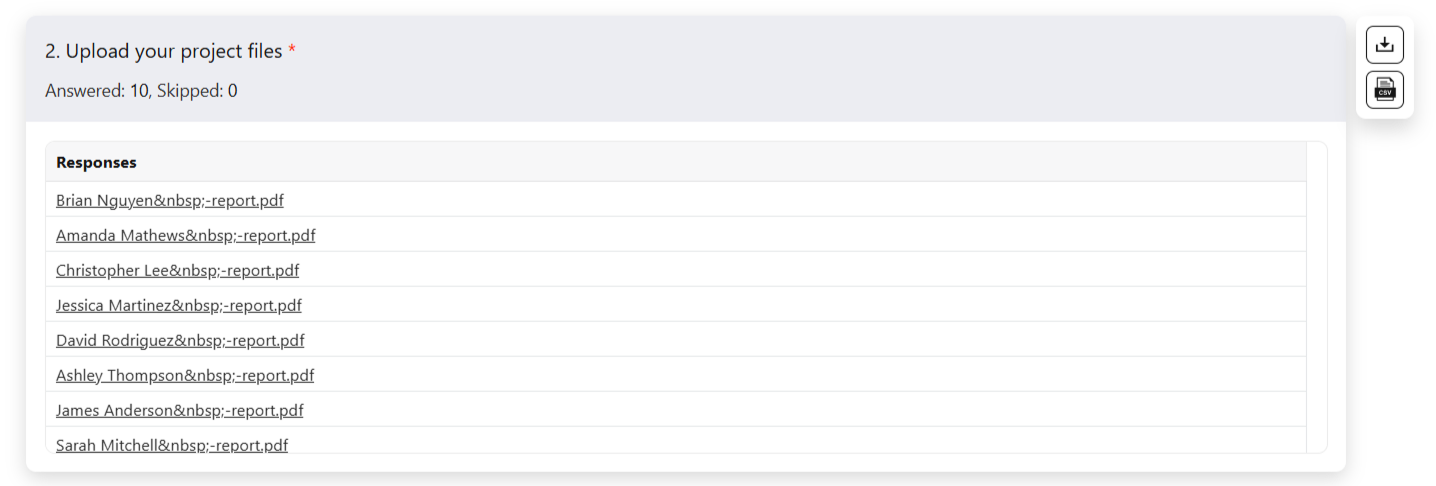
- Locate your File Upload question and click Download all files.
- All collected files are downloaded in a ZIP file.
- Extract the ZIP and you will find the files with the original or custom names you set up, organized and ready to use.
Use cases for the File Upload question
- Job Applications: Collect resumes, cover letters, and portfolios.
- Education & Research: Gather assignments, project work, or academic records.
- Customer Support: Receive screenshots, receipts, or supporting documents for issue resolution.
- Medical & Health Surveys: Securely collect prescriptions, lab reports, or health records.
- Event Registrations: Accept signed forms, photos, or participant ID documents.
BlockSurvey File Upload: Specifications
The table below summarizes what the file upload question supports, based on the settings and limits documented on this page.
| Specification | BlockSurvey |
|---|---|
| Allowed file types | No format whitelist is documented. The question is described for collecting resumes, receipts, images, and other documents. |
| Max file size per file | 10 MB per file. |
| Max files per question | You can set a maximum number of files per question, so respondents can attach multiple files. Each file must stay within the 10 MB limit. |
| Where files are stored | Uploads are stored encrypted and can be downloaded from the Responses section as a ZIP file. You can optionally turn on public file access, and public files are not encrypted. |
| Encryption | Uploads are encrypted by default. |
BlockSurvey vs Google Forms for File Uploads
The main difference is who has to sign in. In Google Forms, a respondent cannot answer a file upload question without a Google account. On the file upload question, Google states: "To answer this question, responders need to sign in to a Google Account." Those files are then stored in a folder on the form owner's Google Drive. Google Forms also disables the file upload question when the form lives on a shared drive or when an administrator has turned on Data Loss Prevention.
BlockSurvey takes the opposite approach. Respondents attach files inside the survey itself, with no separate third-party account or sign-in required, and uploads are encrypted by default. This matters when you collect files from people outside your organization, such as job applicants or customers, who may not have or want a Google account.
| Capability | BlockSurvey | Google Forms |
|---|---|---|
| Respondent must sign in to upload a file | No account or sign-in required for respondents. | Yes. Respondents must sign in to a Google Account. |
| Where uploaded files go | Stored encrypted; downloaded from the Responses section as a ZIP. | Stored in a folder on the form owner's Google Drive. |
| Uploads encrypted by default | Yes. | Not documented. |
| Availability restrictions | None documented for the question type. | Unavailable on shared drives, or when Data Loss Prevention is enabled. |
Conclusion
Secure file collection does not have to be complicated. BlockSurvey's File Upload question type lets you keep your workflow simple, protect sensitive data, and give respondents a smoother experience.
To make document collection secure by default, try BlockSurvey and use encrypted file uploads in your next survey.
Learn more about our privacy and security policy and explore more BlockSurvey features.
How to collect files securely through surveys? FAQ
What is a secure file upload in a survey?
What are the security risks of file uploads?
Does BlockSurvey allow file uploads?
How do I let survey respondents upload files?
What is the maximum file size for uploads in BlockSurvey?
Can respondents upload files without signing in to a Google account?
Get insights.
Unlock value.
- 14-day free trial
- Set up in minutes
- End-to-end encrypted