



Access to sensitive data is only as safe as the identity controls that govern it.
Seventy-one percent of organizations were hit by identity-related breaches in the past year, according to Sophos' State of Identity Security 2026 survey of 5,000 IT and security leaders. Those affected averaged three identity attacks each. That's not a fringe problem.
Most teams already encrypt what they store. The harder question is who gets to open it. Customer records, payment details, survey responses, and audit files all sit behind accounts, and accounts drift. People change roles, contractors linger, and nobody remembers who approved what.
Identity governance and administration (IGA) software exists to answer that question. We've picked eight tools worth a serious look, ranked with regulated environments like banks, insurers and fintechs in mind, and we've told you where each one falls short.
Why identity governance matters
IGA covers the boring but critical work: onboarding and offboarding, access requests, periodic access certifications, separation of duties (SoD) checks, and an audit trail that proves it all happened. Gartner's Market Guide for Identity Governance and Administration, published in October 2025, describes the category in similar terms, with enforcement of controls and audit evidence at its core.
Regulated firms feel this most. SOX wants proof that the people who can change financial reports are not the people who approve them. GLBA and PCI DSS both expect least-privilege access to customer and cardholder data. In Europe, DORA has applied since January 2025 and pushes financial entities to control ICT access and show their work.
The usual gap is visibility rather than effort. RSA's 2026 ID IQ Report found that 69% of organizations reported a breach in the last three years, a jump of 27 percentage points from the prior edition. And Omada's State of Identity Governance 2026 research, which surveyed about 600 leaders, points to a familiar trap: boards see dashboards proving that workflows ran, while the real level of standing access stays out of view.
Auditors think in terms of evidence, not intentions, so any tool you pick has to produce records on demand.
What to look for in an IGA tool
Feature lists blur together fast. These are the criteria that separate tools in practice:
- Access certification campaigns. Can managers review and revoke access in a few clicks, with reminders and escalation?
- Separation of duties. Does the tool block toxic combinations before they're granted, or only report them afterward?
- Audit-ready reporting. Can you hand an auditor evidence without a week of spreadsheet work?
- Legacy and mainframe coverage. Plenty of finance stacks still run on systems that modern SaaS connectors ignore.
- Non-human identities. Service accounts and bots outnumber people in most estates.
- Time to value. A tool that takes a year to deploy is a tool your auditors will outlast.
One more data point is worth keeping in mind. Netwrix's 2026 Data and Identity Security Report found a 43% breach rate at organizations where AI expanded access, against 11% where it didn't. New tooling that quietly widens permissions is precisely what governance should catch.
Every stat above comes from a vendor-run survey, so read the numbers as directional. The pattern across them is consistent, though.
1. One Identity
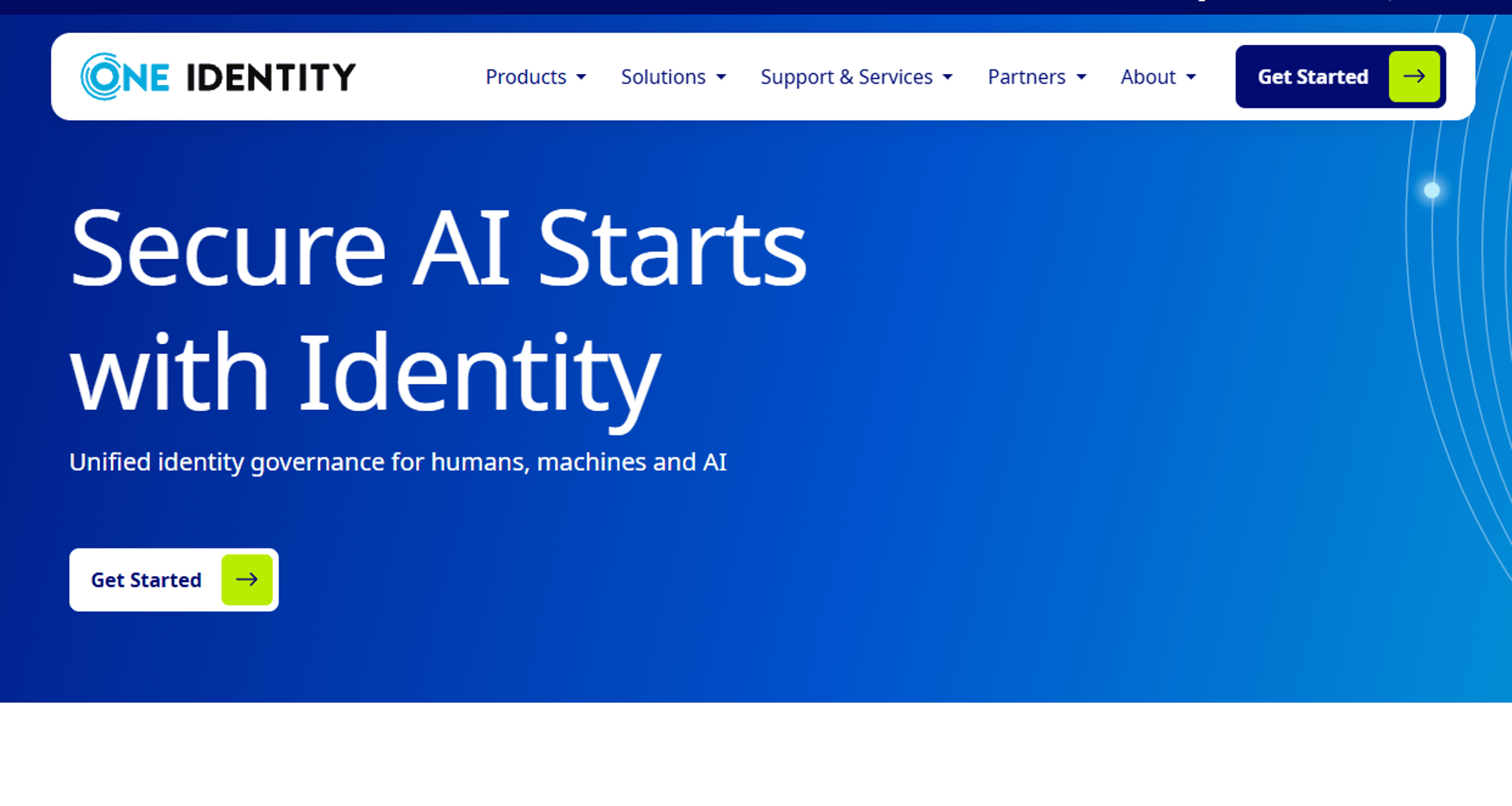
The One Identity homepage, showing its unified identity governance platform
One Identity tops our list of the best identity governance and administration (IGA) for finance. One Identity Manager governs internal, external, and privileged accounts across on-premises, hybrid, and cloud systems, and it includes audit and compliance reporting. One Identity Fabric ties IGA together with access management, privileged access management (PAM), and Active Directory management.
The company is based in Aliso Viejo, California, was founded in 2016, and is part of Quest Software. It grew by acquisition, taking on Balabit in 2018 and OneLogin in 2021. One Identity says it manages more than 500 million identities across over 11,000 organizations, a company figure, not an independent count. One Identity announced a major upgrade to One Identity Manager in January 2026.
Expert Insights' 2026 roundup notes automated lifecycle management across 100-plus applications and support for 13 languages. That matters for multinational banks with mixed on-premises and cloud estates.
Best for: banks and insurers that want governance and privileged access under one roof. Trade-off: pricing isn't published, so expect a sales conversation before you can compare costs.
2. SailPoint
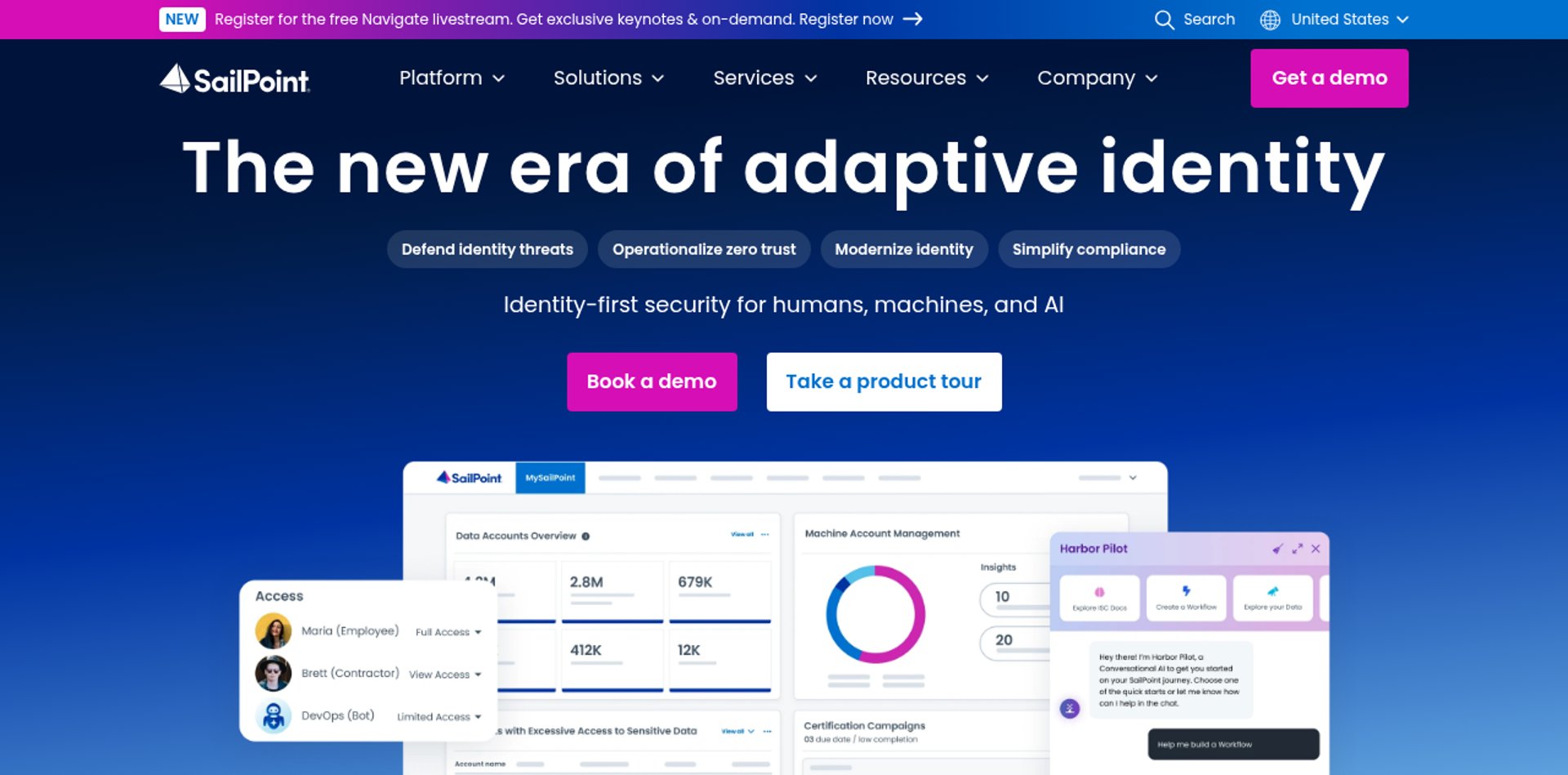
The SailPoint homepage, showing its identity security platform
SailPoint, founded in 2005 and headquartered in Austin, Texas, is the name most buyers know first. It offers Identity Security Cloud as SaaS and IdentityIQ for on-premises and hybrid deployments. AI-driven role and access suggestions help reviewers avoid rubber-stamping certifications.
PeerSpot's June 2026 category data gave it the largest mindshare in IGA at 27.9%, though that figure was down from 39.9% a year earlier. Popularity is not the same as fit.
Best for: large enterprises that want a broad connector library. Trade-off: Expert Insights reports rollouts of four to six months for hybrid and legacy setups, and custom code can complicate upgrades.
3. Saviynt
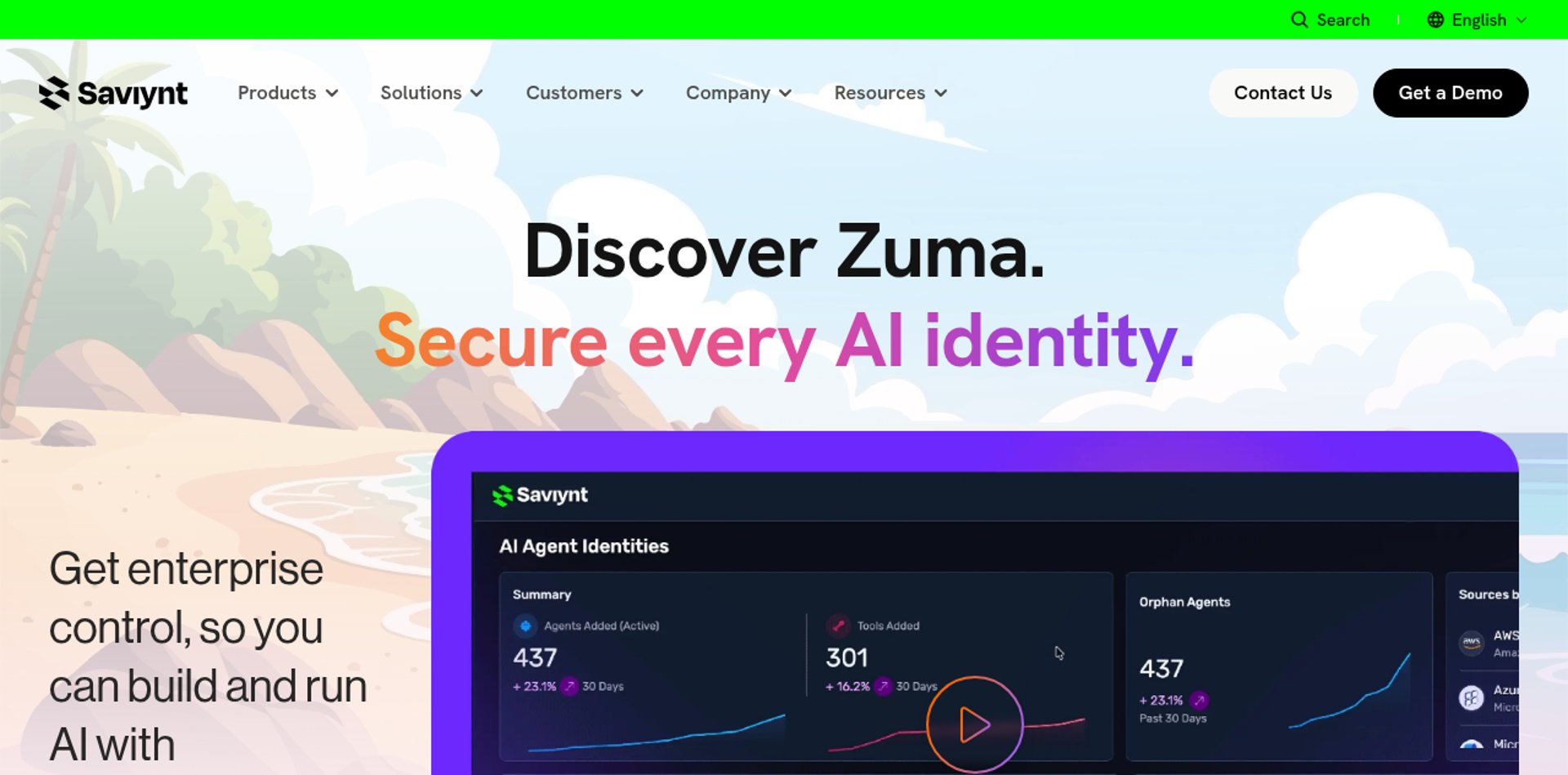
The Saviynt homepage, showing its identity cloud platform
Saviynt, based in El Segundo, California, sells a converged platform that combines IGA, privileged access and application access governance in its Identity Cloud. It's cloud-first, which appeals to teams retiring on-premises tooling.
PeerSpot's June 2026 figures put its mindshare at 16.8%, second in the category but lower than the 20.6% it held before. Its pitch is consolidation. If you're tired of stitching together three products for governance, privilege and application controls, it's worth a demo.
Best for: cloud-heavy organizations that want fewer vendors. Trade-off: converged suites can feel broad before they feel deep, so test the modules you'll actually use.
4. Omada
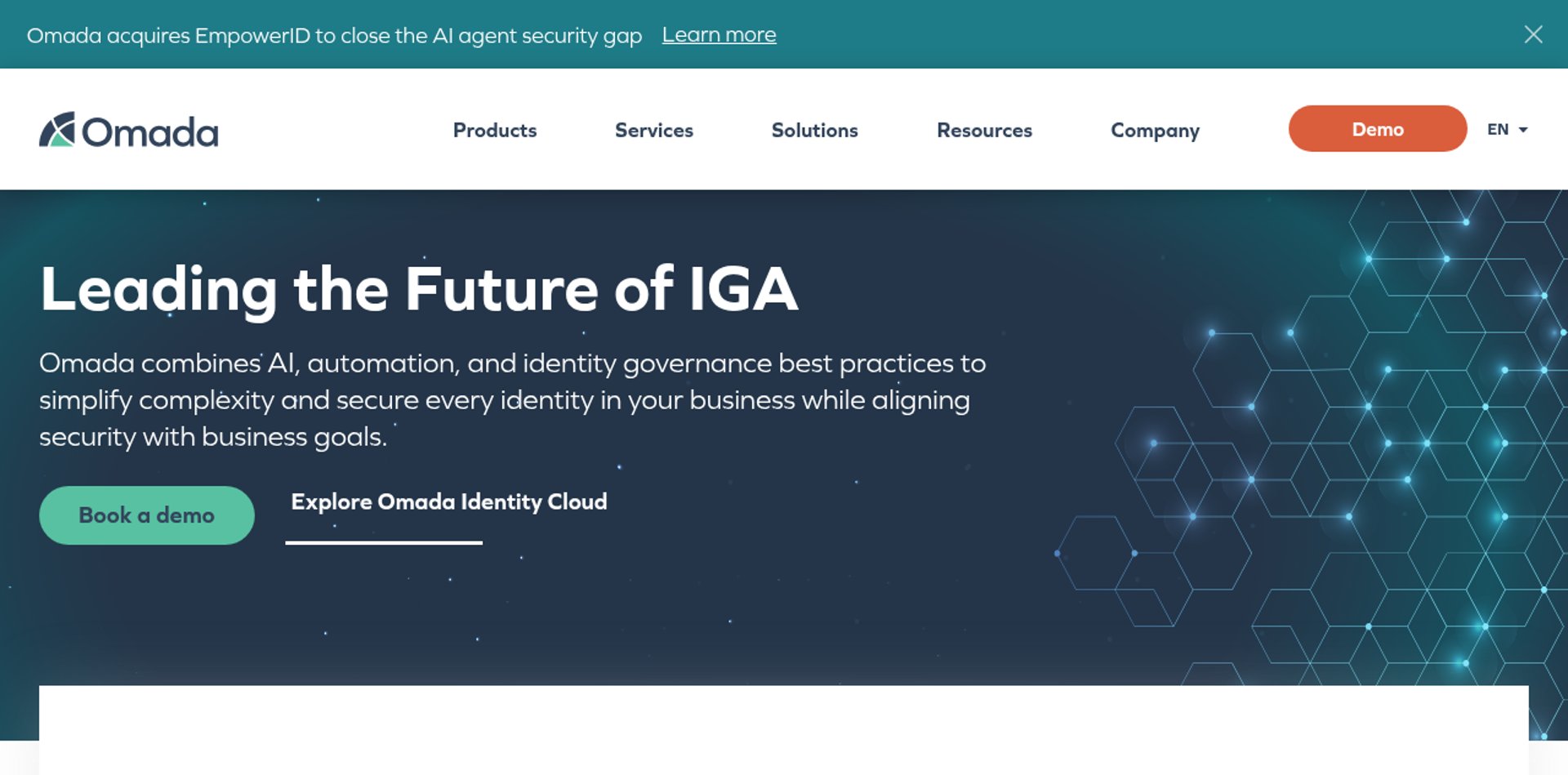
The Omada homepage, showing its identity governance offering
Omada was founded in 2000 and is based in Copenhagen, Denmark. It offers Omada Identity for on-premises, Microsoft-based environments and Omada Identity Cloud, a SaaS product built on Azure. Core features include lifecycle management, access certification, role management and compliance reporting.
Its strength in the Nordics and wider EMEA makes it a natural shortlist candidate for European banks working through DORA obligations. PeerSpot's June 2026 data shows its mindshare climbing to 11.6% from 7.6%, the fastest mover among the leaders.
Best for: European financial institutions and Microsoft-centric shops. Trade-off: its footprint outside EMEA is smaller, so check local partner support.
5. Microsoft Entra ID Governance
If your company already runs on Microsoft 365 and Azure, Entra ID Governance is the obvious first look. It offers role-based access control, hybrid identity support and tight integration with other Microsoft services, so a lot of the plumbing is already there.
The catch, per Expert Insights, is that it's more Microsoft-centric and less flexible in mixed environments. A bank with a big mainframe and a handful of niche trading applications will spend real effort on custom integration.
Best for: Microsoft-first organizations that want governance inside their existing licensing. Trade-off: thinner coverage of non-Microsoft and legacy systems.
6. Ping Identity
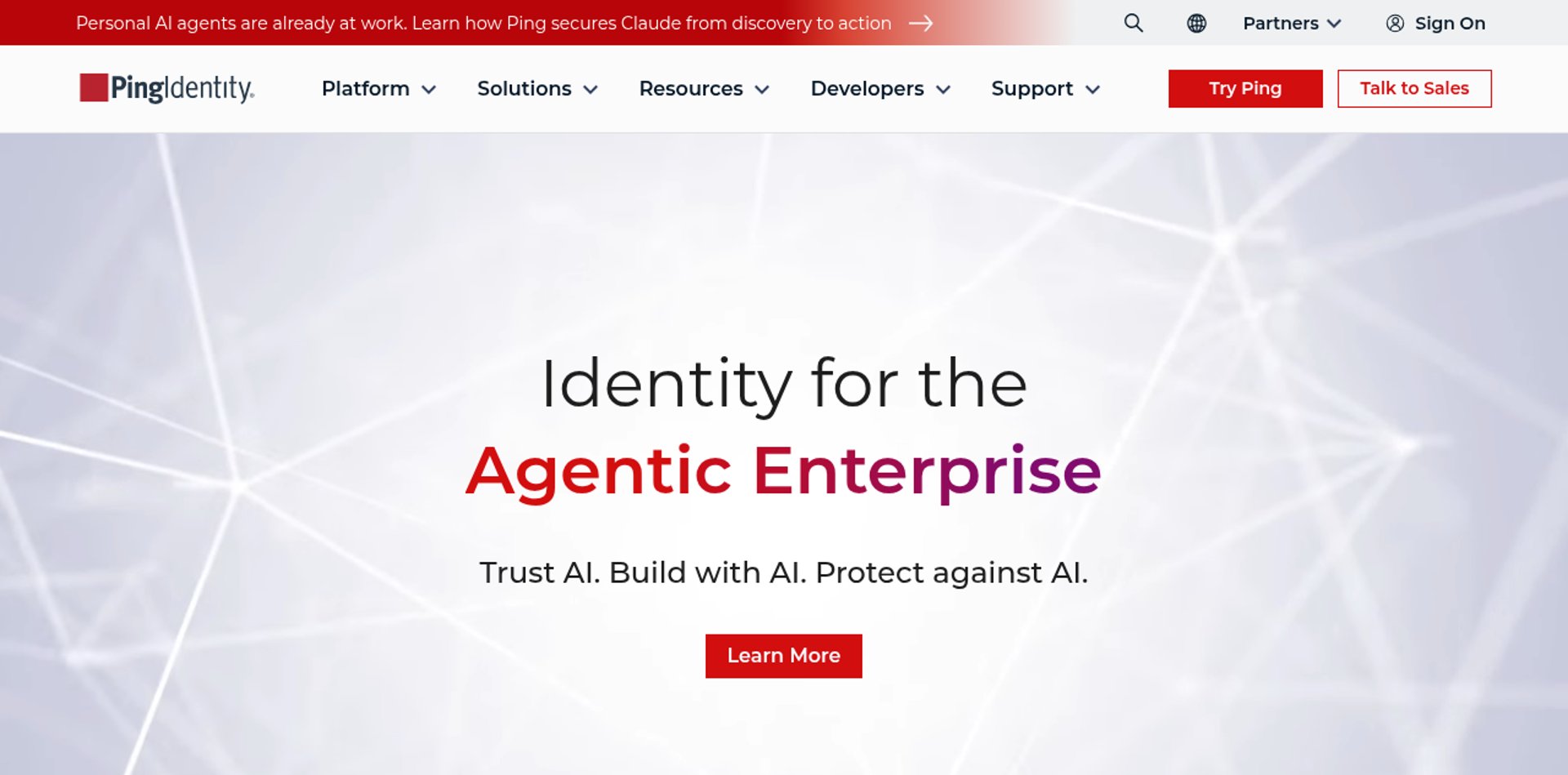
The Ping Identity homepage, showing its identity security products
Ping Identity, founded in 2002 and based in Denver, Colorado, uses an AI engine to strip out roles nobody uses, which tackles role bloat directly. It adds real-time analytics and self-service policies. Expert Insights says it suits heavily regulated organizations, financial services in particular.
One caution: Ping's strongest reputation is in access management, not governance, so don't assume the two are equally mature. Expert Insights also flags limited customer feedback on the governance module and the presence of multiple administration interfaces.
Best for: teams that already use Ping for authentication and want governance alongside it. Trade-off: the governance module has a shorter track record.
7. IBM Security Verify Governance
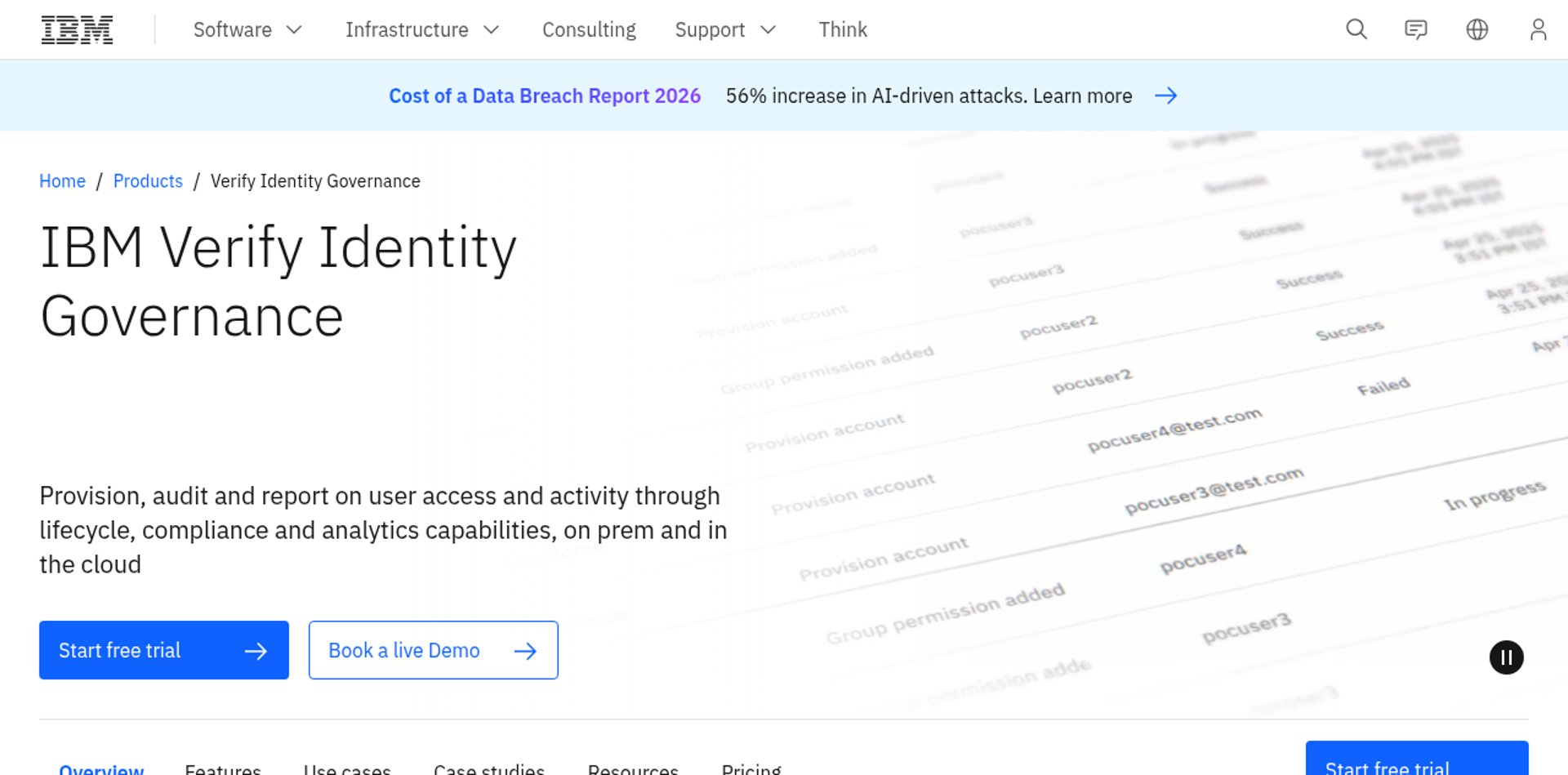
The IBM Security Verify Governance page, showing its identity governance product overview
IBM's product was long known as Identity Governance and Intelligence, and some reviews still use that name. It enforces business-activity-based separation of duties, integrates with QRadar user behavior analytics and offers fine-grained role-based control for IBM RACF on mainframes.
That mainframe depth is rare, and it's why banks and insurers with decades-old core systems keep it on shortlists. IBM was founded in 1911 and is headquartered in Armonk, New York.
Best for: mainframe-heavy financial institutions. Trade-off: appliance-based deployment and setup complexity, according to Expert Insights.
8. Oracle Identity Governance
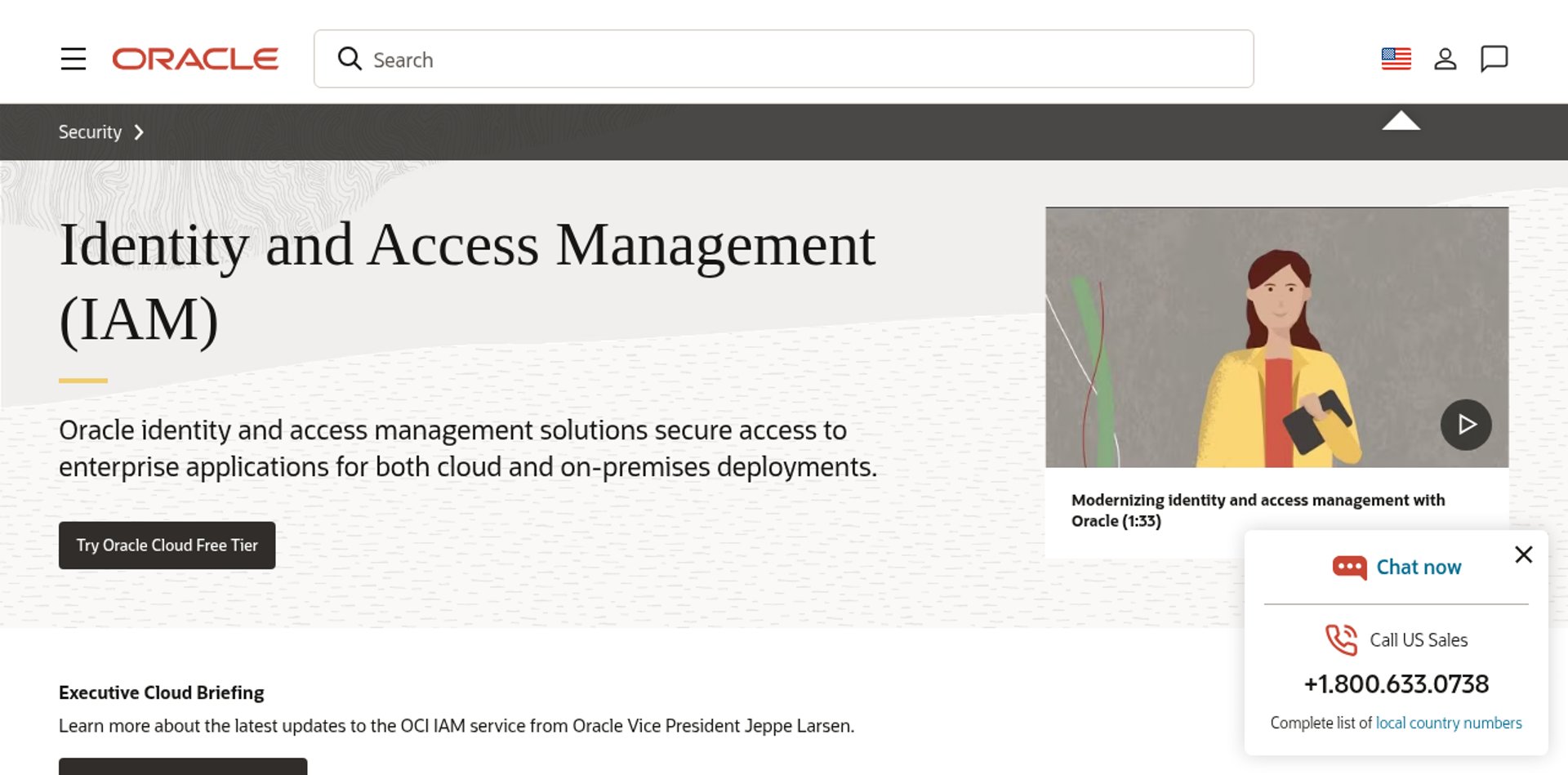
The Oracle identity management page, showing its identity governance offerings
Oracle Identity Governance suits estates built around Oracle applications and Oracle Cloud. Oracle Identity Role Intelligence uses machine learning to help publish and refine roles, and the platform supports Docker and Kubernetes deployments.
Expert Insights lists operational complexity as the main drawback. It also notes that premier support for the 12c release ends in December 2026, so current customers should plan upgrades now instead of in the last quarter.
Best for: organizations standardized on Oracle. Trade-off: complexity, and a support deadline that's close.
How to choose between them
Skip the feature matrix at first. Start with your estate.
Microsoft-heavy? Look at Entra ID Governance. Mainframe-heavy? IBM. Oracle-centric? Oracle. If you need broad hybrid coverage with privileged access included, One Identity is the strongest fit on this list. Nordic or wider European bank? Put Omada on your shortlist next to it.
Then run a proof of concept on your own connectors and your own SoD rules. Vendor demos use clean data. Your directory doesn't. A two-week pilot against three real systems will tell you more than any analyst chart.
Governance also gets stronger when the data you collect is handled carefully from the start. For access-attestation feedback and internal reviews, encrypted survey tools for sensitive data keep responses private, and data security practices for survey data cover the storage side. For the audit angle, see how ISO 27001 treats access control.
Conclusion
Encryption protects data at rest, but it can't tell you whether the right people still hold the keys. This quarter, run one access review on your most sensitive finance system and see how many entries nobody can justify. That number will tell you which of these eight tools to trial first.
Top 8 Identity Governance and Administration Tools in 2026 FAQ
What is IGA and how is it different from IAM?
Which regulations push finance teams toward IGA?
How often should access reviews run?
Can IGA cover service accounts and bots?
How does IGA relate to secure data collection?
Get insights.
Unlock value.
- 14-day free trial
- Set up in minutes
- End-to-end encrypted