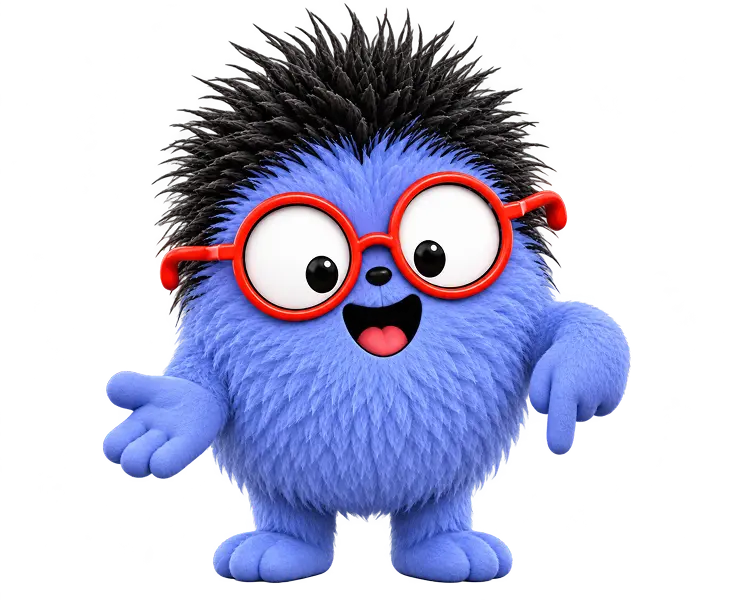
I had a long list of questions before I had a single sketch.
BlockSurvey needed a mascot that could explain privacy without feeling cold. This is the story of how I actually started: what I read, what I asked, the decisions I had to make, and how the learning slowly turned into Frizzy & Crew.
If you are about to start a mascot project and do not know where to begin, this is the path I took.
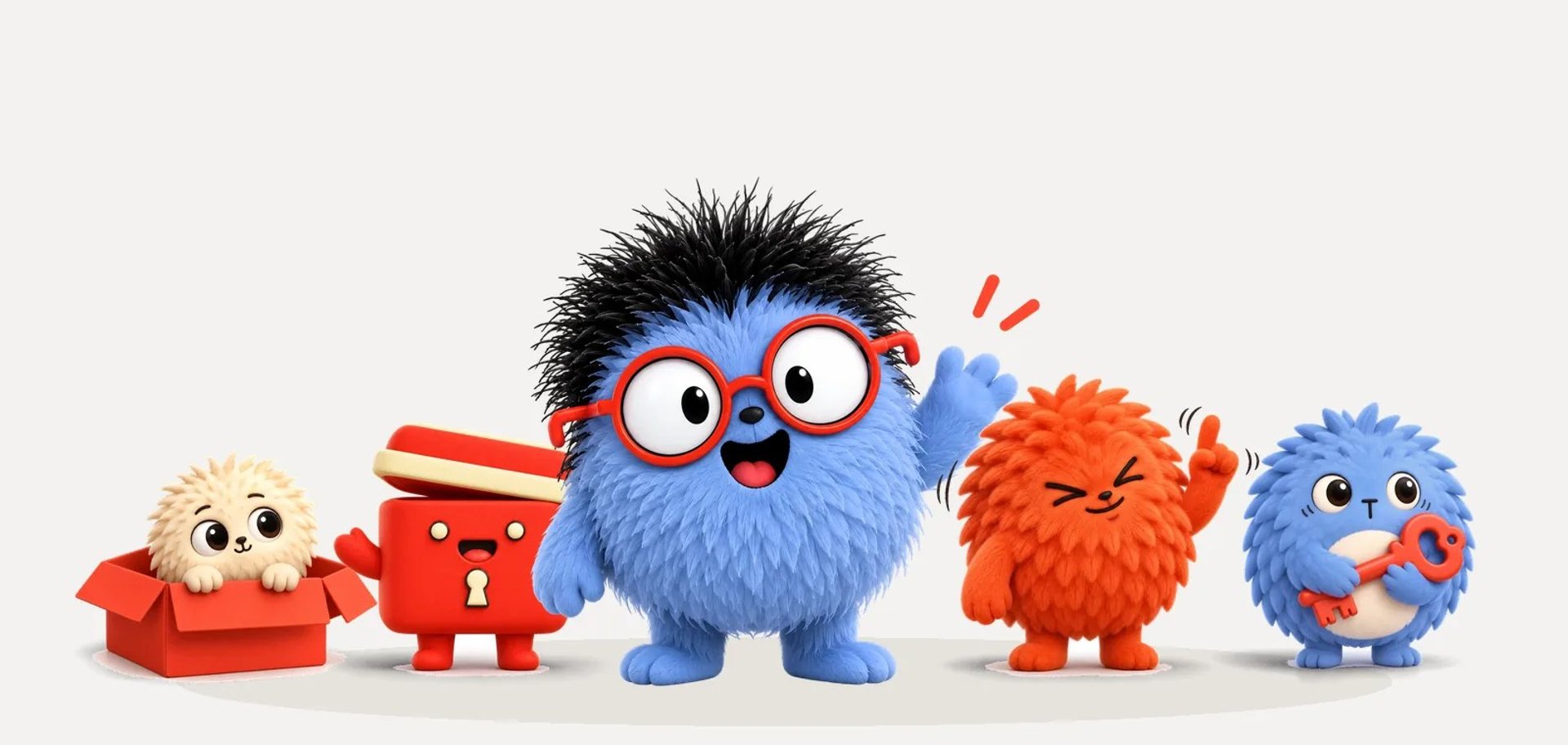
Where it ended up. Here is how it began.
- Ask: Start with the questions.
- Learn: How mascots are made, and by whom.
- Decide: Who designs it, and how.
- Create: Jobs first, then shapes.
- Test: Real scenes, real moments.
The path from first question to first scene.
I Started With Questions, Not Drawings
When the idea of a BlockSurvey mascot came up, my first instinct was not to open a design tool. It was to ask questions.
What makes a mascot work? Who designs them, and how? Should I design it myself, or should someone else? What would a mascot need to do for a privacy platform that handles sensitive information?
I did not have the answers yet, and that was fine. A mascot is a long project, and the questions you ask on day one decide what you build on day thirty.
Learning How Mascots Are Made
So I made research the first step. I worked through learning resources on mascot design, and I looked closely at the mascot design process itself, from the first brief to the finished character.
I studied the major mascot creators and how they work, and I looked at mascot as a service platforms too, including Indian ones, to understand what an outside team would deliver and what it would not.
I was not looking for a style to copy. I was looking for the shape of the process, so I could build one that fit our product.
I also paid attention to how other products use mascots inside the experience, with one main character and a small crew showing up in places like loading screens, empty states and notifications. That showed me early that a mascot is a system, not a single illustration.
Deciding Who Should Design It
The biggest question was whether I should design the mascot myself or bring in a third party. Both were real options, and I did not want to rush it.
Outside services can be fast. But a mascot for BlockSurvey would be seen across the product, the website and our campaigns, so it had to stay close to the people who know the product best. In the end we decided to design it in house.
Planning My Own Process
Once I knew I would design it, I wrote down the order I would work in. Research first, covering the learning, the creators, their process and the platforms. Then creation. Then customer and brand input once there was something real to react to.
I also set the direction. Our audience is largely in the US, so I wanted professional, polished characters, friendly without ever feeling childish.
- Warm and approachable, never childish
- Credible for a platform that handles sensitive data
- Recognizable even at icon size
- Expressive enough to show many emotions
- Works in both 2D and 3D
- Sits comfortably next to BlockSurvey’s red and black
Whenever two ideas looked equally good, I went back to this list. It settled more questions than opinions did.
Jobs Before Drawings
The most useful thing I did before drawing anything was to decide what each character is for, and how it should make someone feel.
| Character | Job | Feeling |
|---|---|---|
| Frizzy | Helps you create surveys | “I can do this” |
| Hoard | Helps you understand your responses | “I understand” |
| Peep | Helps you reach the right audience | “I’m succeeding” |
| Nope | Protects your data and account | “I’m safe” |
| Blok | Helps users whenever they get stuck | “I’m supported” |
Jobs and feelings came first. Shapes came after.
A character with a job always has a reason to be on screen. That made every later decision easier, from where a character belongs to what expression it should wear.
Creating the First Frizzy
The first Frizzy was not made in software. It was a pen and marker sketch: a round, fluffy body, wild black hair, big red glasses and a small smile. That one drawing set the personality that every later version had to keep.
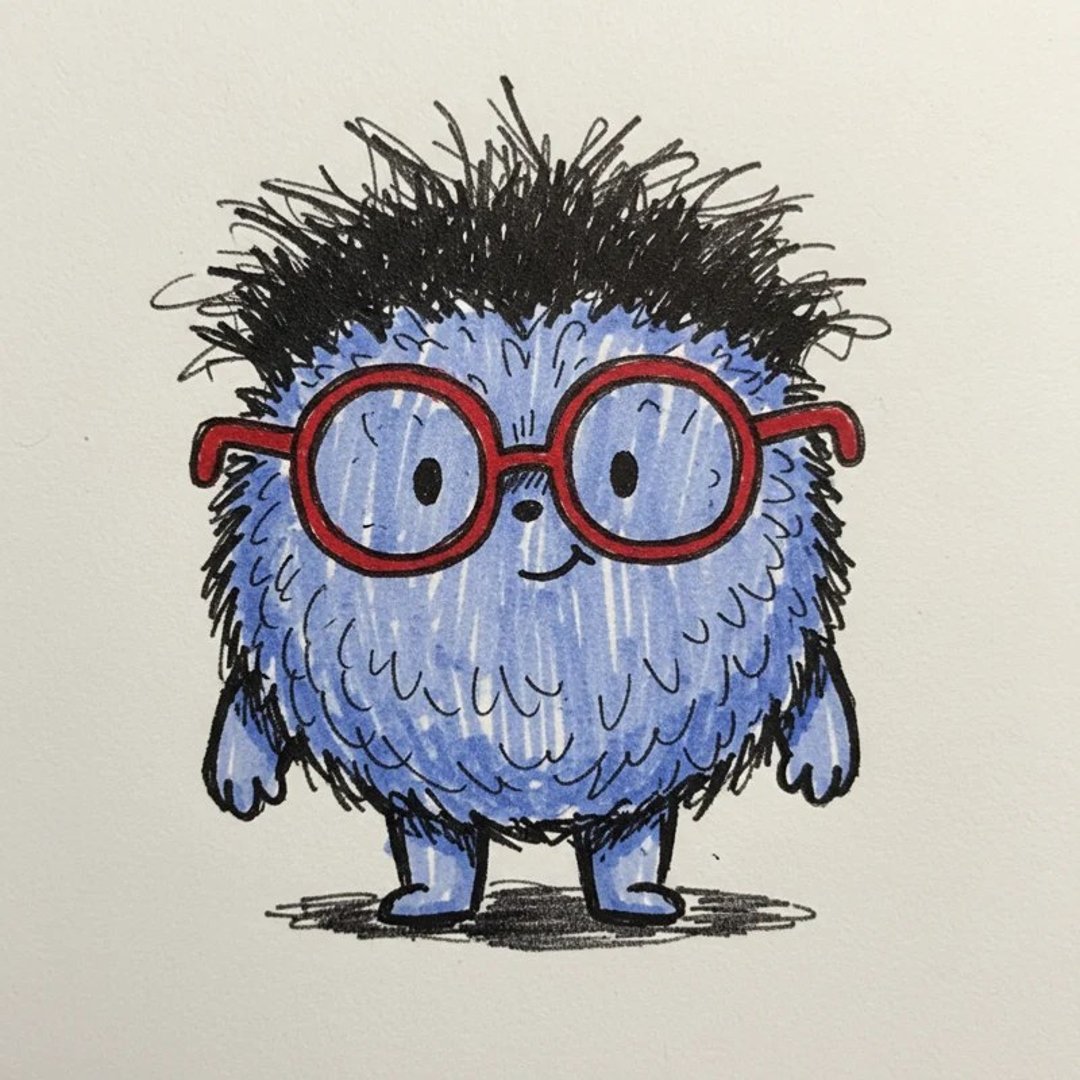
The initial sketch of Frizzy, drawn by hand before any digital work.
Only then did I move to the digital character. I began in solid black, with no colour and no face, because a good mascot should still be recognizable as a shadow, even at the size of a small icon.
From there I worked on the details that give a character personality. The hair took the longest. My early version was dense and heavy, and it read as one solid shape. Through several rounds I moved to fine, irregular, wiry strands with air between them, so the hair feels light and a little unpredictable.
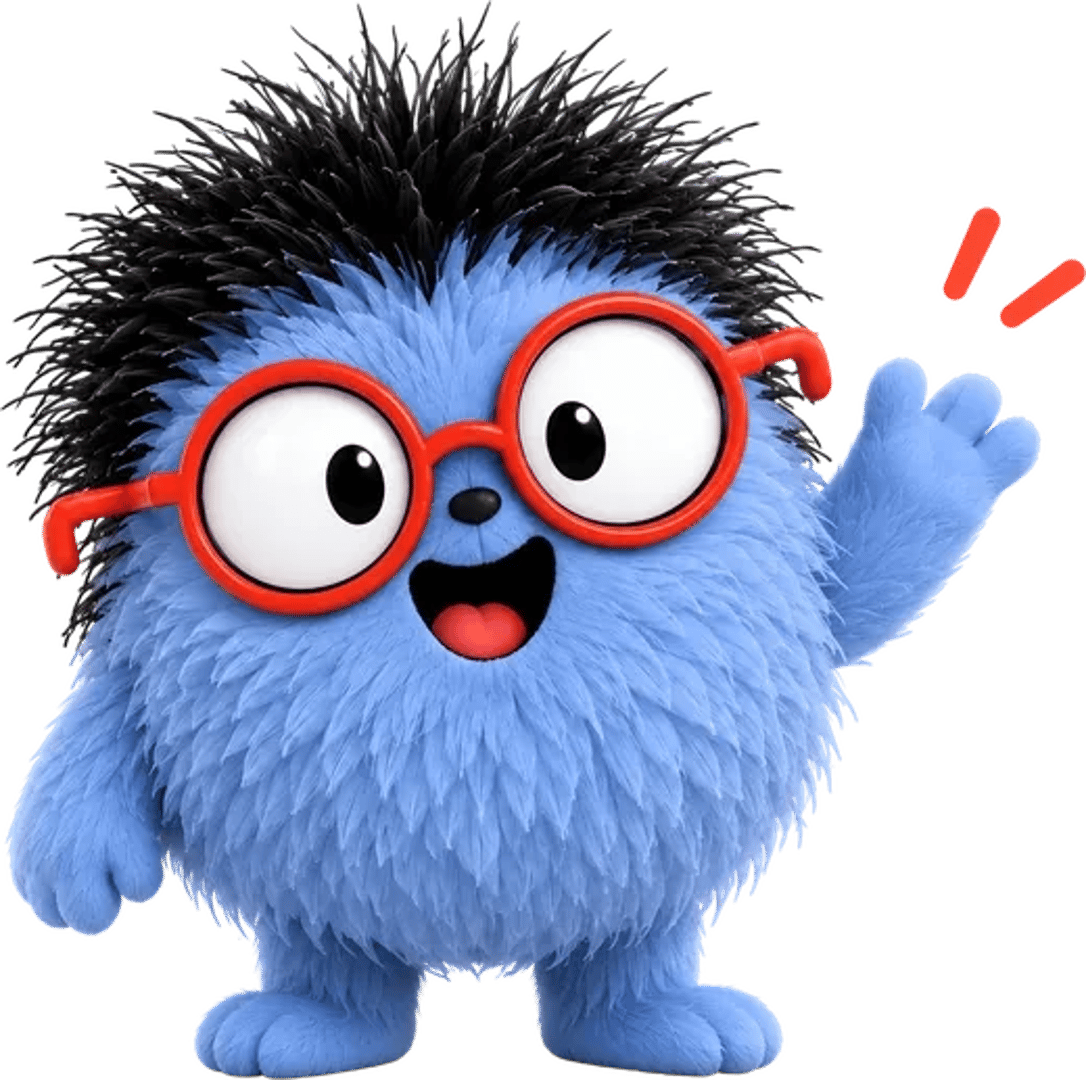
An early pass at the hair, dense and heavy, before I moved to fine, wiry strands.
Fur, glasses and colour went through the same cycle of trying, comparing and simplifying. Each one followed the same rule: keep what is recognizable, remove what is not.
Writing the Rules
Somewhere in the middle I realised a good illustration is not a mascot yet. A mascot is a character that stays itself across hundreds of scenes, drawn on different days.
So I wrote the rules down. Frizzy’s fine wiry hair, round red glasses, plush fur and soft periwinkle colour are locked. Expressions, poses and props are free to change. I also built a library of expressions, so any new scene starts from a feeling that already looks like Frizzy.
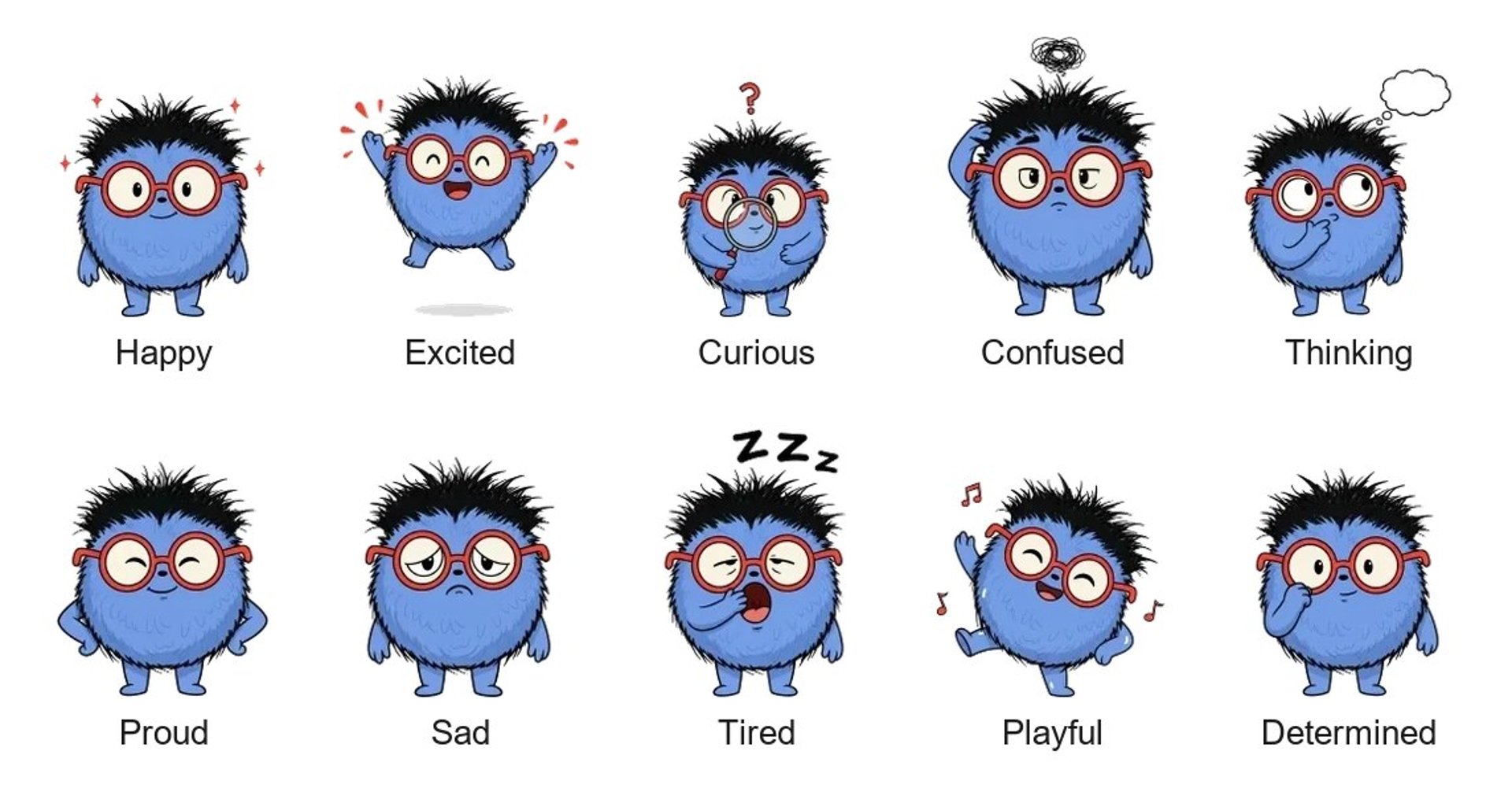
An expression library that every new scene can start from.
Putting Frizzy to Work
The real test came when I put Frizzy into scenes that look like the product. A character sheet can hide problems that a real screen shows right away.
I tried sign up, survey creation, answering a survey and privacy explanations. I also added two human characters, Bob who creates surveys and Alice who answers them, so Frizzy guides people instead of replacing them.
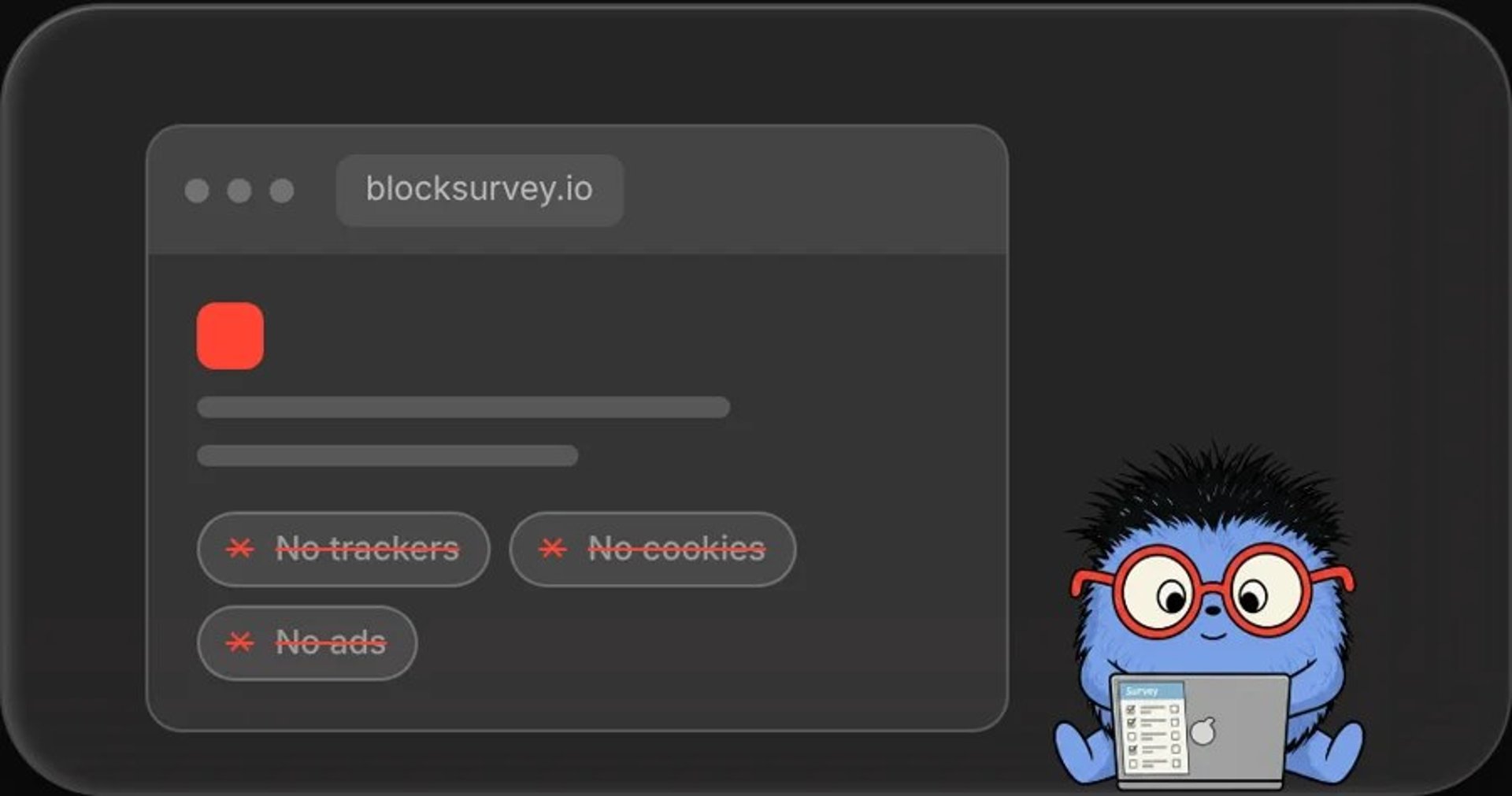
Signing up. Frizzy shows there are no trackers, cookies or ads.
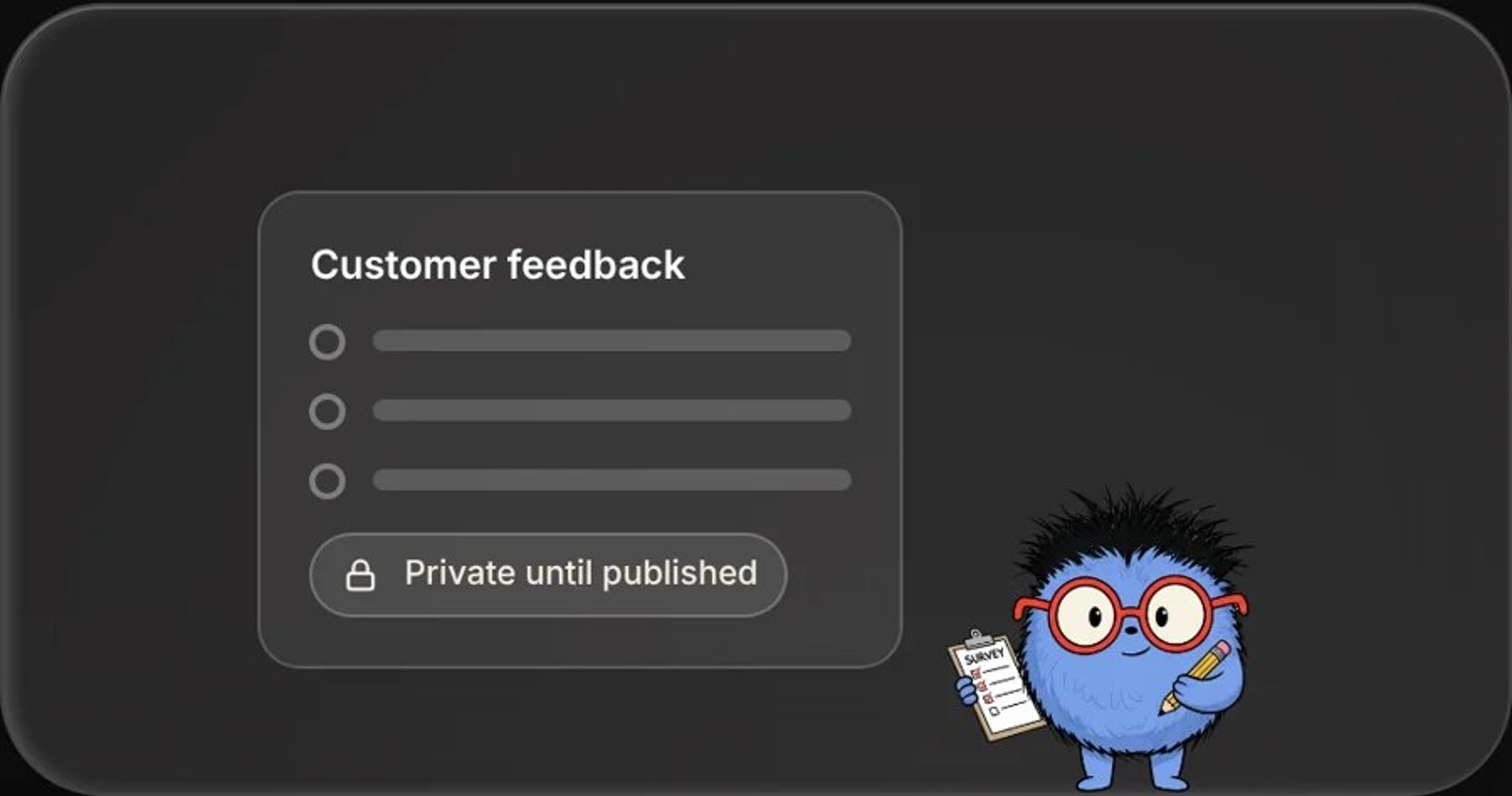
Creating a survey. Frizzy with a survey that stays private until published.
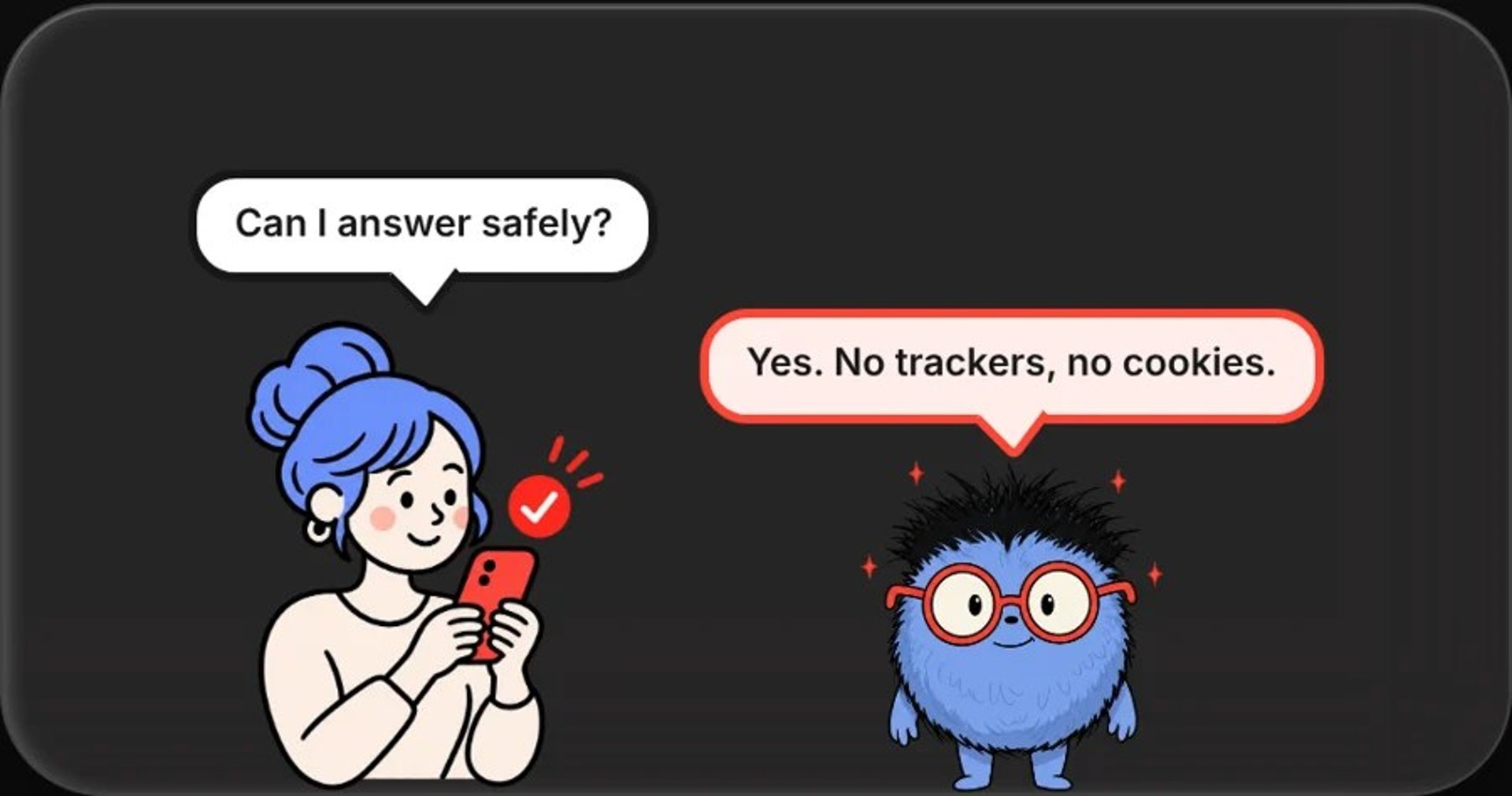
Taking a survey. Alice asks if it is safe and Frizzy answers.
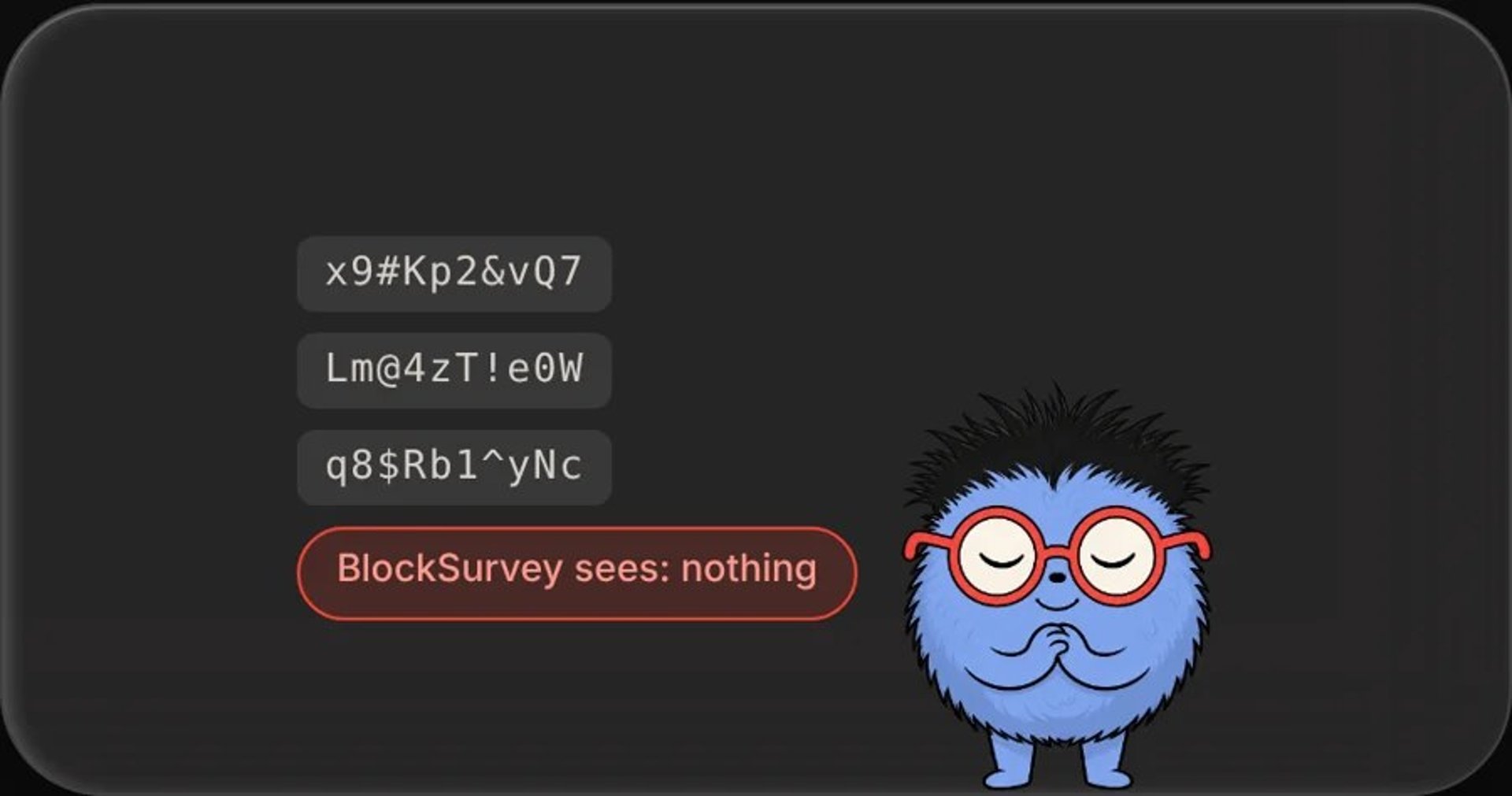
Zero knowledge. Frizzy keeps calm because BlockSurvey sees nothing.
Scenes from the 2D How it works page, with Bob and Alice as the human characters.
Each scene taught me something. If Frizzy was not doing a clear job in a scene, the scene was not ready.
What I Learned, and What Comes Next
- Start with questions: Good research starts with knowing what you do not know.
- Learn the process first: Understand how others work before you invent your own.
- Give every character a job: One job and one feeling makes every choice easier.
- Write the rules down: A mascot is a system, not a single drawing.
Frizzy & Crew are only the beginning. Next I am animating the 2D crew, tying each character to product moments like cancelling a plan, publishing a survey and empty states, and bringing Frizzy into the survey taking screen with a welcome, a progress bar and a thank you. I am also exploring how to make Frizzy feel more lifelike without breaking the rules that make him Frizzy.
One Idea Behind All of It
Through every step I kept coming back to the same belief. Privacy does not have to feel complicated or intimidating. It can be understandable, approachable and even a little fun.
Learning how to build a mascot was how I found a way to say that.
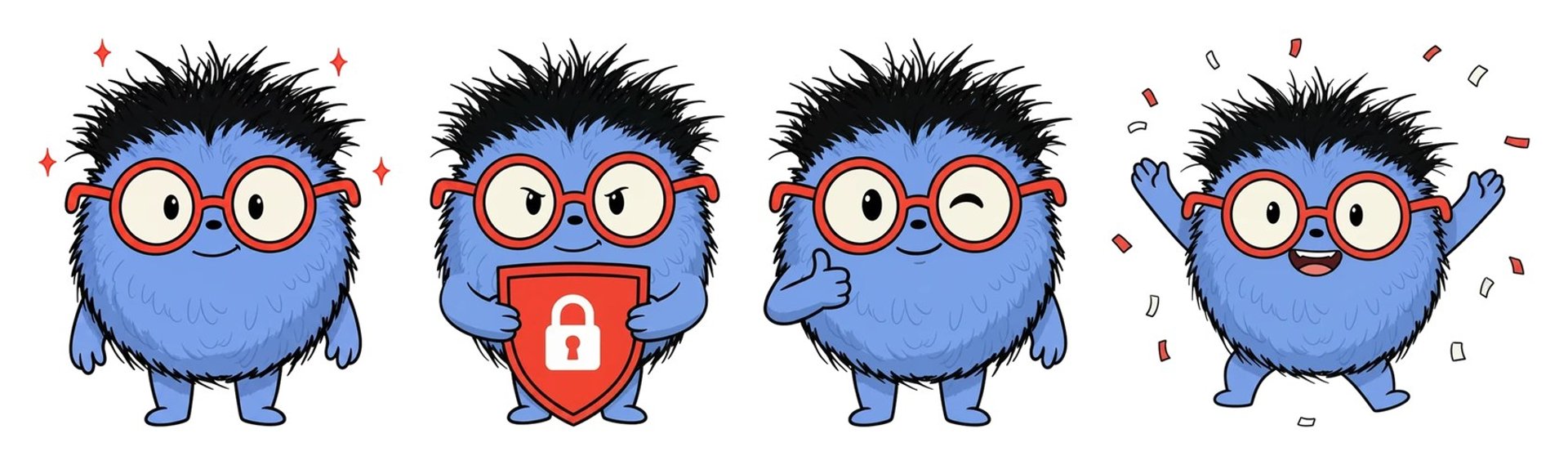
Friendly, never complicated: Frizzy in 2D.
Say hello to Frizzy & Crew. They’re excited to meet you!
How I Started Designing a Mascot: From Learning to Frizzy & Crew FAQ
Where did you start when designing the mascot?
Did you design it in house or hire someone?
Why does every character have one job and one feeling?
What is locked in the character rules?
What is next for the mascots?
Get insights.
Unlock value.
- 14-day free trial
- Set up in minutes
- End-to-end encrypted